The Michigan Democratic Party formally declared its opposition this week to a proposed ballot measure that would impose strict voter identification requirements on Michigan elections, labeling it “voter suppression” and signaling that the fight over voting access will be a defining battle of the 2026 election cycle.
The proposal, which advocates submitted petition signatures for earlier this month, would require voters to show photo ID before casting a ballot. If organizers gather enough valid signatures to qualify and voters approve it in November, the rules would take effect starting in the 2027 election cycle. Here is what the proposal actually contains, how it compares to Michigan’s current system, and why both sides are drawing hard lines.
What the Proposed Ballot Measure Would Require
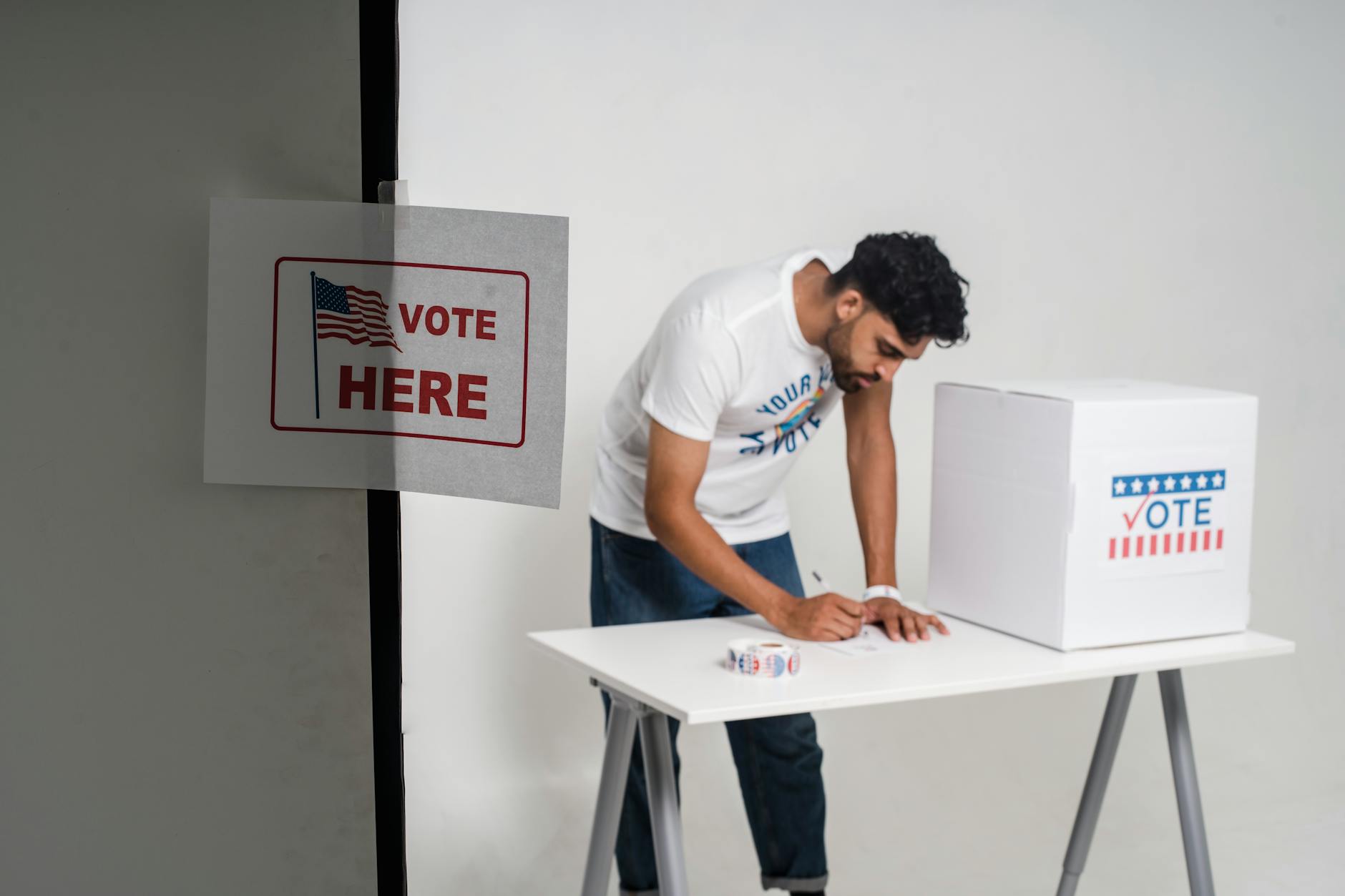
The proposal would mandate that voters present qualifying photo identification at the polls. Under strict voter ID frameworks like the one being proposed, acceptable forms of ID typically include government-issued photo IDs such as driver’s licenses, state-issued ID cards, passports, and military identification. Voters who cannot present qualifying ID would face a more cumbersome process, often requiring them to cast a provisional ballot and then take additional steps afterward to verify their identity, such as signing an affidavit or returning to an election office.
The measure targets implementation starting in the 2027 election cycle, meaning it would not affect November 2026 races even if voters approve it this fall. Supporters are framing this timeline as a reasonable phase-in period. Critics argue it is still an unnecessary barrier built on a false premise.
How Michigan Currently Handles Voter ID
Michigan already has a voter identification requirement on the books, but the current system includes a significant alternative path. Voters who show up without acceptable ID can sign an affidavit attesting to their identity and still cast a regular ballot, not a provisional one. That affidavit option is the crux of the debate.
Proponents of the stricter proposal say the affidavit workaround essentially guts any meaningful identification requirement. They argue that allowing voters to simply sign their name and proceed renders the ID rule toothless and leaves elections vulnerable to fraud. Opponents say the affidavit process works precisely as intended: it preserves access for eligible voters who lack the specific documents the state deems acceptable while still creating a legal record tied to an individual’s sworn statement.
Michigan’s 2022 Prop 2 and Why It Matters Here
Any honest accounting of this ballot fight requires understanding Proposition 2, which Michigan voters passed in November 2022 with roughly 60 percent support. That constitutional amendment significantly expanded voting access in Michigan. It locked in nine days of early voting, established automatic voter registration through state agencies, guaranteed the right to absentee voting without an excuse, and required the state to provide free absentee ballot drop boxes.
Prop 2 also directly addressed identification, requiring the state to provide a free ID to any voter who needs one for election purposes. That provision was specifically designed to blunt one of the core criticisms of strict voter ID laws: that they impose a cost on voting for people who lack qualifying documents and cannot afford to obtain them. Critics call it a poll tax in all but name.
The 2026 proposal interacts with Prop 2 in ways that are not fully resolved. Because Prop 2 is a constitutional amendment, any conflicting statutory requirement would face legal challenge. The scope of the free ID provision, how widely it is distributed, how voters are informed about it, and what happens to a voter who cannot obtain one before Election Day all become critical implementation questions if the strict ID proposal clears the ballot and passes.
Why Democrats Are Calling It Voter Suppression
The Michigan Democratic Party’s formal opposition centers on who gets left behind when strict ID requirements go into effect. Research on voter ID laws consistently identifies the same populations as most likely to lack qualifying government-issued photo ID: lower-income voters, elderly voters, voters of color, young voters, and people who have recently moved. These groups overlap substantially with Democratic constituencies, which critics say is not a coincidence.
The party argues that even with free ID provisions, strict requirements create friction that depresses turnout. Obtaining an ID requires documentation, time, and sometimes transportation. For voters who work multiple jobs, lack reliable transportation, or live in areas with limited access to Secretary of State offices, that friction is not trivial. The party’s position is that the proposal solves a problem that does not meaningfully exist at the scale being implied while creating real barriers for real voters.
The “voter suppression” framing also draws on the history of voter ID laws nationally. Federal courts have struck down or curtailed strict voter ID laws in multiple states after finding that they imposed disproportionate burdens on minority voters in violation of the Voting Rights Act. Michigan’s proposal has not yet faced legal scrutiny at that level, but Democrats are signaling they will pursue every avenue, including litigation, if the measure passes.
What Proponents Say
Supporters of the ballot measure argue that requiring photo ID to vote is a common-sense security measure that most Americans broadly support. National polling consistently shows majorities favoring voter ID requirements, though those numbers shift depending on how questions are worded and whether free ID provisions are included in the description.
Advocates point to the prevalence of ID requirements in everyday life, from boarding a plane to buying certain medications, and argue that voting, as the foundation of democratic governance, deserves at least as much verification. They contend that the affidavit alternative in Michigan’s current system is not a meaningful safeguard and that election integrity demands a verifiable, document-based standard.
Proponents also note that the 2027 implementation date and the existence of Prop 2’s free ID requirement address the access concerns opponents raise. If the state is obligated to provide free IDs to voters who need them, the argument that strict ID imposes a financial burden becomes harder to sustain, at least in theory.
The Signature Math and What Comes Next
To get on the November 2026 ballot, petition organizers must submit enough valid signatures to meet Michigan’s constitutional threshold, which requires signatures equal to eight percent of the votes cast in the last gubernatorial election. Given 2022 turnout figures, that means organizers need to clear roughly 446,000 valid signatures. Signatures were submitted earlier this month, and the Board of State Canvassers will need to verify them.
If the measure qualifies, it will join what is shaping up to be a crowded and consequential 2026 ballot in Michigan. The state’s gubernatorial race is already drawing national attention, and a high-profile voting rights battle on the same ballot could reshape turnout dynamics and mobilize partisan bases on both sides.
What the Evidence Actually Shows
The claim that widespread in-person voter fraud is a serious problem in Michigan elections is not supported by documented evidence at any significant scale. Studies of voter fraud nationally find it to be extraordinarily rare, and Michigan officials have not produced evidence suggesting the state is an exception.
At the same time, implementation details matter enormously. A strict voter ID law paired with a robust, well-funded, and widely accessible free ID program looks very different in practice from one that exists on paper but reaches only a fraction of the voters who need it. Whether Michigan’s free ID infrastructure, shaped by Prop 2, would actually meet the needs of voters who currently rely on the affidavit option is a question the proposal’s supporters have not answered in precise terms.
The Michigan Democratic Party’s formal opposition hardens the battle lines. Expect the coming months to bring a coordinated campaign against the measure, legal analysis challenging its compatibility with Prop 2, and significant spending on both sides as the signature verification process unfolds and the November ballot takes shape.
For Detroit voters, the stakes are immediate. Wayne County consistently has some of the highest concentrations of residents without government-issued photo ID in the state, driven by demographics, income distribution, and transportation access to Secretary of State locations. What gets decided at the statewide ballot box will land hardest in precincts across this city.