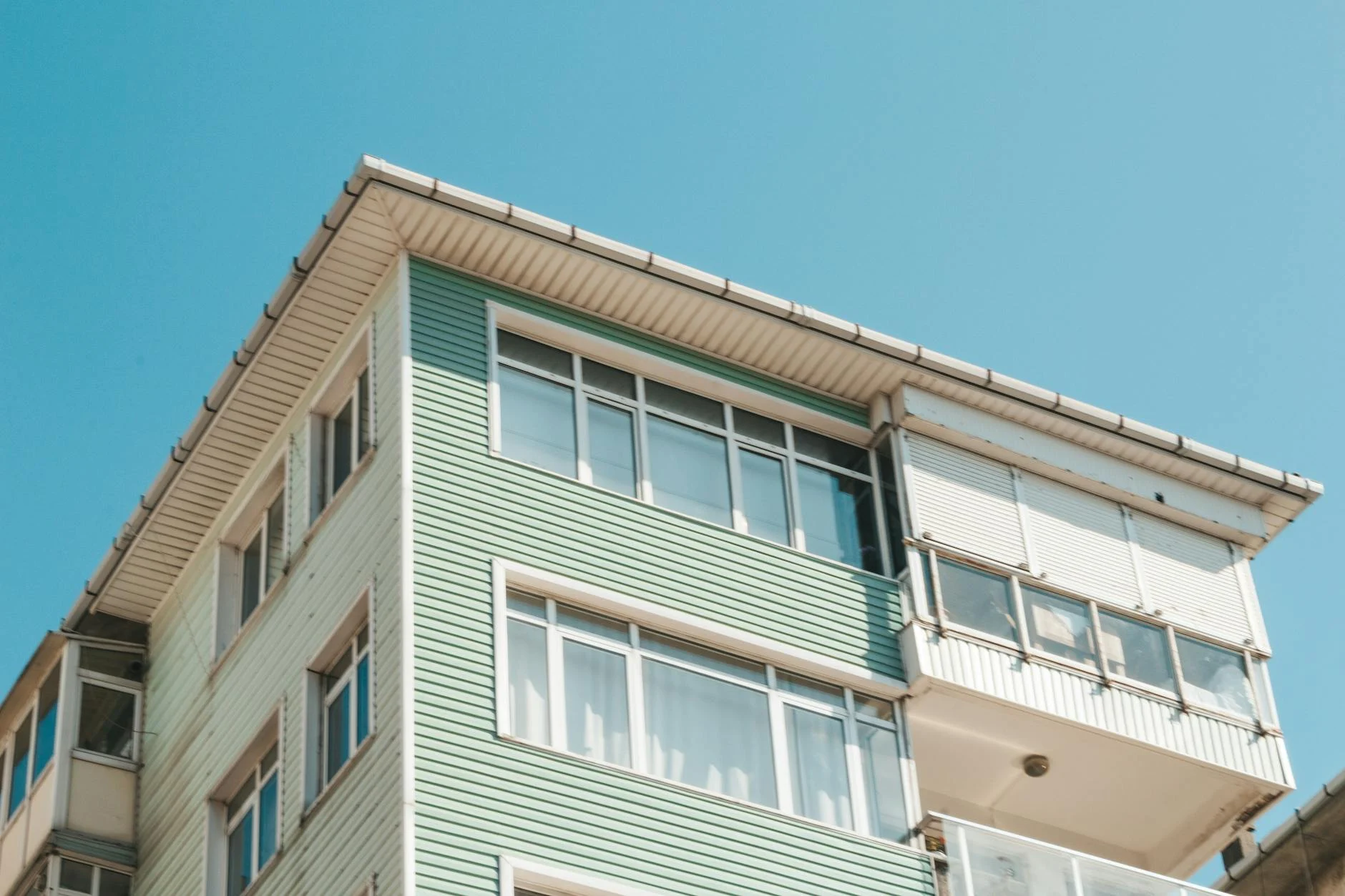
East Jefferson has waited a long time for this moment. Ground has officially broken on the Jefferson Avenue Apartments, a 52-unit affordable housing complex rising along East Jefferson in the Jefferson-Chalmers neighborhood. For longtime residents of one of Detroit’s most historically significant but chronically underinvested corridors, the construction cranes represent something more than just new buildings.
Jefferson-Chalmers sits at the far east end of the city, pressed up against the Detroit River and the Grosse Pointe border. It’s a neighborhood that carries genuine architectural beauty, lined with substantial single-family homes and a riverfront that would command premium prices in almost any other American city. But decades of population loss, disinvestment, and flooding issues have left significant gaps in the housing stock. The neighborhood sits in a FEMA flood zone that has complicated development for years. Vacant lots punctuate blocks that were once fully built out. Properties that haven’t seen renovation in a generation sit alongside well-maintained homes whose owners never left. The neighborhood association has been pushing for exactly this kind of investment for years.
The Jefferson Avenue Apartments project plants 52 units of affordable housing directly into that context. The development targets residents earning at or below the area median income thresholds that qualify under affordable housing financing structures, meaning working-class Detroiters, seniors on fixed incomes, and families who have been priced out of market-rate stock but want to stay in or return to the east riverfront corridor. This isn’t luxury with an affordability veneer. The project is built specifically to serve people who need it.
How the Money Works
Affordable housing doesn’t get built in Detroit without a layered financing structure. Low-Income Housing Tax Credits, the federal LIHTC program administered in Michigan through the Michigan State Housing Development Authority, form the backbone of nearly all projects of this type and scale. Developers receive tax credits in exchange for keeping units affordable over a compliance period, typically 15 to 30 years. Investors, usually banks or large corporations with federal tax liability, purchase those credits, generating the equity that makes construction financially viable.
The City of Detroit has also been an active partner in affordable housing deals through the Housing and Revitalization Department, which can bring HOME Investment Partnerships Program funds, Community Development Block Grant dollars, or direct city subsidies to the table. The Detroit Housing Commission administers additional federal resources. Projects in neighborhoods like Jefferson-Chalmers, which qualify for various distressed-community designations, often stack multiple funding sources precisely because the development economics in lower-density residential corridors don’t work on market-rate rents alone.
Michigan’s state housing finance agency has been competitive in recent LIHTC allocation rounds, and Detroit projects have fared reasonably well when developers bring strong community support documentation and demonstrate alignment with the city’s Strategic Neighborhood Fund priorities or other planning frameworks. Jefferson-Chalmers has been part of ongoing city planning conversations, which strengthens a project’s position in those allocation competitions.
What East Jefferson Actually Looks Like Right Now
To understand why 52 units matters, you have to understand the current housing reality on this stretch of Jefferson. The corridor between the Indian Village historic district and the Chalmers boundary is not a blank slate, but it is sparse. The commercial strip that once served the neighborhood has thinned considerably, with scattered businesses separated by vacancies. Residential density has dropped substantially from mid-century levels, when this part of the city housed autoworkers and their families in numbers the neighborhood hasn’t seen in decades.
The housing stock that remains splits roughly into two categories. There are the substantial homes, brick two-stories and larger single-family houses that reflect the neighborhood’s working-class prosperity during Detroit’s industrial peak, many of which are still occupied and in reasonable condition. And then there is a significant inventory of vacant or deteriorating structures that have sat in various stages of distress through multiple city administrations and multiple rounds of blight removal efforts. The flooding risk has complicated rehabilitation economics for private developers who might otherwise have moved on properties here years ago.
New multifamily construction, the kind that adds net new units rather than simply rehabbing existing structures, has been rare on this particular stretch. The Jefferson Avenue Apartments project changes that calculus. A 52-unit building represents a meaningful addition to residential density, brings new residents to a corridor that needs foot traffic and population to support retail and services, and signals to other developers that the financing and approvals pathway is navigable here.
The Neighborhood’s Stakes
Residents in Jefferson-Chalmers have been vocal about wanting development that serves current and returning community members rather than displacing them. That concern is not hypothetical. Neighborhoods along Detroit’s riverfront, particularly in the Rivertown and East Riverfront areas closer to downtown, have seen market pressures increase as the city’s overall trajectory has improved. Jefferson-Chalmers is far enough east that speculative pressure hasn’t arrived with the same intensity, but the community is aware of what happened in other Detroit neighborhoods where investment came without affordability protections.
An affordable housing project at this scale, with deed restrictions that lock in affordability requirements for a significant period, provides a hedge against that scenario. It means units that will remain accessible to lower-income residents even if the broader East Jefferson corridor attracts additional investment over the coming years. Given that the city has expressed ongoing interest in the Jefferson-Chalmers area and that riverfront access is an increasingly valued amenity in Detroit’s development conversation, those protections matter.
The residents who have stayed in Jefferson-Chalmers through the difficult decades are also the residents most likely to need affordable options. Many are seniors who bought homes when prices were modest and have watched property values fluctuate without seeing corresponding improvements in neighborhood services or infrastructure. Others are renters in aging single-family homes or small multifamily buildings that haven’t been updated in years. The Jefferson Avenue Apartments offers a newer, code-compliant alternative without requiring a move out of the neighborhood.
What’s in the Pipeline
One project does not reverse decades of disinvestment, and Jefferson-Chalmers residents and advocates know that. But the Jefferson Avenue Apartments sits within a broader, if still developing, pipeline of activity along East Jefferson. The city has made infrastructure investments in parts of the corridor. Community development organizations active on the east side have been working to assemble land and attract partners for additional residential and mixed-use projects. The question is whether the Jefferson Avenue Apartments can function as a catalyst, demonstrating to LIHTC investors, lenders, and other developers that the neighborhood is viable and that projects here can be financed and built.
Detroit’s affordable housing pipeline has strengthened considerably since 2020, with projects completing in New Center, on the near east side, in Southwest Detroit, and in other neighborhoods that spent years waiting for investment to materialize. Each completed project adds to the evidence base that development here works. Jefferson-Chalmers needs that same track record to accelerate its own pipeline.
The city’s overall goal of producing and preserving thousands of affordable units over the next several years depends on projects like this one actually completing construction and reaching full occupancy. Construction is underway now, which means Jefferson-Chalmers moves from the planning column to the delivery column. That’s not a small thing.
Ground-Level Meaning
Fifty-two units won’t solve Jefferson-Chalmers’ housing challenges. Nothing that fits on a single site will. But the Jefferson Avenue Apartments represents real construction happening right now on East Jefferson, a corridor where residents have watched planning documents come and go without shovels hitting the ground. Workers are on site. The building is rising.
For a neighborhood that has absorbed a lot of disappointment alongside its genuine resilience, that physical fact carries weight. Detroit’s east riverfront has the bones, the architecture, the river access, the proximity to Waterworks Park and the Grosse Pointe border, to support a much denser and more vibrant residential community than currently exists. Getting there requires exactly the kind of project-by-project accumulation of investment that the Jefferson Avenue Apartments represents.
The people who live on those blocks already know what the neighborhood could be. The question has always been whether the financing, the political will, and the development capacity would show up to match their patience. On East Jefferson in 2026, the answer, for 52 families, is yes.