Shirley Brezzell hears the same four words every year. “I don’t eat that.”
The fifth graders at Mackenzie Elementary-Middle School say it when she puts pickled beets in front of them. They say it for eggplant. They say it for oatmeal burgers. Brezzell, who teaches science and social studies in the Detroit Public Schools Community District, has heard it so many times she calls it famous last words, because by the time her students have grown the food themselves, harvested it off the vine, and cooked it in class, those words don’t hold up anymore.
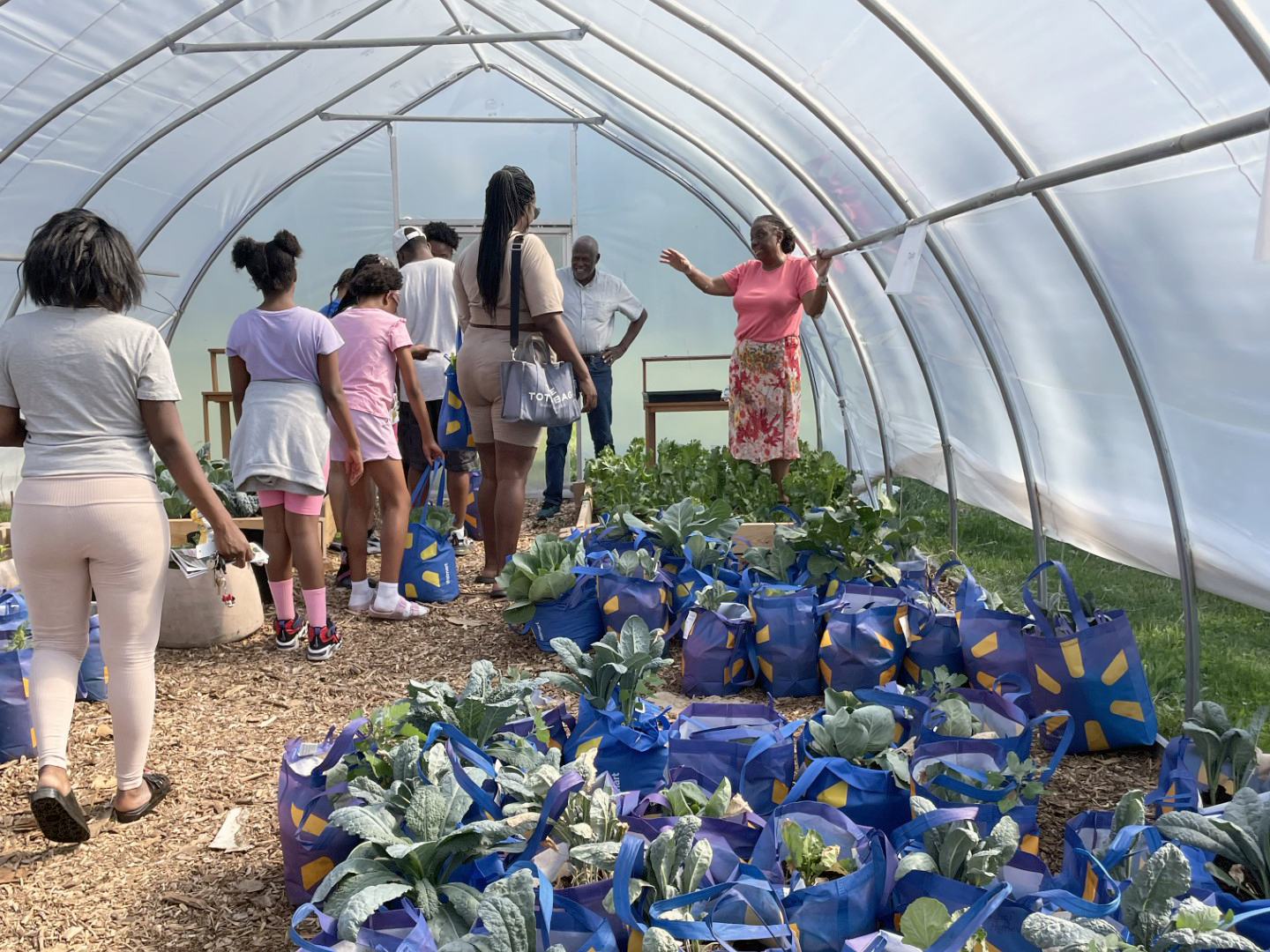
That shift, from refusal to curiosity to appetite, is what Brezzell has been building toward with an outdoor garden she created and now manages at Mackenzie, a school on Detroit’s west side. The garden runs on Walmart recyclable bags and raised garden beds where students grow tomatoes, potatoes, greens, and cabbage. The setup isn’t fancy. It works.
From seeds to science
Brezzell connects the garden directly to her science curriculum. During a unit on matter, she takes students outside to pick fresh fruits and vegetables, then brings them back inside to cook together so they can watch how matter changes state through heat. The lesson isn’t abstract. Students see the carrot they pulled from the soil become something soft and sweet on a stovetop, and the idea clicks in a way a textbook diagram can’t replicate.
“When they see the process from seed to a piece of fruit that they can actually eat, it is mind-blowing,” Brezzell told Bridge Detroit. “Oh, and then when you taste it, and when it comes off of the vine, and it is all organic, it’s a whole other experience.”
The garden also reaches past the school day. This spring, Brezzell is hosting an event where parents come in and build their own Walmart bag planters to take home and grow food for their families. During summer, the garden produces enough that it supplies fresh fruits and vegetables to the broader school community, not just students.
A second career, and no regrets
Brezzell didn’t start in a classroom. She’s a Detroit native who graduated from Cass Technical High School in 1975 and spent 22 years in the banking industry, working her way from teller to operations manager before her bank closed. She started homeschooling her own children after that, then moved into substitute teaching in Detroit Public Schools. By 2011, she was a certified teacher.
That’s a long road to a classroom.
She doesn’t see it that way. “My regret is that I didn’t do it 100 years ago. Absolutely, this is my calling,” Brezzell said.
The Michigan Science Teachers Association recognized her work this year, naming her the 2026 Elementary School Science Teacher of the Year. The award reflects what her colleagues and students already see in her approach, which pushes kids into hands-on contact with food systems, biology, and chemistry through something as direct as digging in dirt.
The harvest has to come first
Brezzell is thinking about retirement. It won’t happen this year, and not just because she isn’t ready. The garden produces plants she distributes to students’ families so they can grow food at home over the summer. She won’t leave before that cycle completes.
Research from Michigan State University Extension and other nutrition education programs has shown that children who grow food are more likely to eat fruits and vegetables and carry those habits past the school year. Brezzell’s approach fits that pattern, but she’d probably frame it simpler than that. Kids who grow it will eat it. She’s seen it happen too many times to think otherwise.
“I have to bring the harvest,” she said.
Her students will likely spend this spring watching tomatoes climb the Walmart bags in the garden beds, pulling greens with their own hands, and cooking something in class they swore they’d never touch. Some of them will decide they were wrong. That’s the whole point.