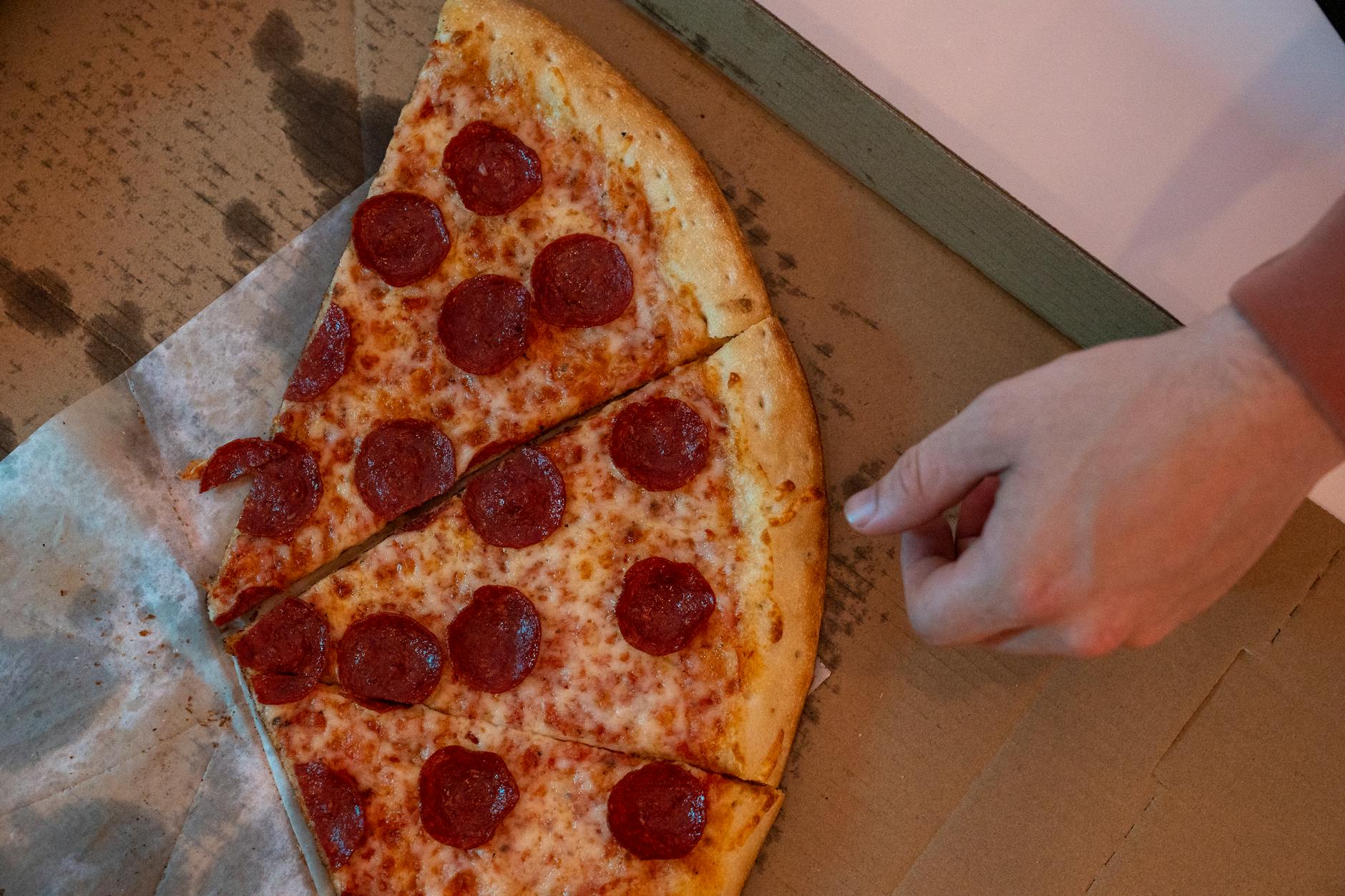
Eight decades of square pies, Sicilian dough, and Wisconsin brick cheese, and Buddy’s Pizza has a new set of hands guiding it. The sale of Buddy’s Pizza to a group of local investors landed this week with the weight you’d expect for an institution that didn’t just serve Detroit-style pizza, it invented it. For anyone who grew up in metro Detroit, this news hits somewhere between the stomach and the chest.
Let’s start where Buddy’s starts: 1946. A tavern on Six Mile and Conant in the Hamtramck neighborhood, a Sicilian immigrant community with a taste for thick, focaccia-like dough pressed into blue steel automotive pans. The rectangular pie that came out of those pans, crispy on the bottom and sides, airy inside, topped with cheese pushed to the very edges so it caramelizes into a crackling, lacy crust, that pie is now made in cities from Brooklyn to Los Angeles. But it was born here. Buddy’s didn’t follow a trend. Buddy’s is the source.
That origin story matters enormously when you’re talking about an ownership transition. This isn’t a chain that got famous somewhere else and opened outposts in Detroit. Buddy’s is Detroit. The brand is woven into the city’s identity in a way that few restaurants anywhere can claim.
So when word spread that Buddy’s had been sold, the immediate question from regulars and industry people alike was the same one: is it going to change?
The Anxiety Is Legitimate
Detroit has watched beloved institutions get swallowed by outside money before, and the pattern is familiar. A beloved brand gets acquired, the investors trim costs, the recipe gets “optimized,” and five years later you’re eating something that looks like the original but tastes like a committee decision. That fear is baked into any conversation about Buddy’s Pizza and new ownership.
But the key word in this deal is local. The investors who acquired Buddy’s are based in metro Detroit. That doesn’t guarantee anything, but it does shift the calculus. People who live here, who have eaten at Buddy’s their entire lives, who understand that the Cloverleaf location on Van Dyke is a pilgrimage site for a reason, tend to approach the brand differently than a private equity firm headquartered somewhere that has never heard of brick cheese.
Local ownership means accountability that is geographic and social, not just financial. You can’t gut a Detroit institution and then show your face at Eastern Market on a Saturday morning without consequences.
What We Know About the Deal
Specific financial terms of the sale have not been disclosed publicly. What has been confirmed is that the transaction transfers ownership from the group that had been running the chain to a locally based investment group. Buddy’s has operated more than a dozen locations across metro Detroit, and the expectation from initial reporting is that those locations will continue to operate. There is no announced plan to shutter restaurants or dramatically restructure the footprint.
The menu, as of now, appears to be staying intact. The pizza, the salads, the antipasto. The recipes that have made Buddy’s a destination rather than a convenience. Nothing in the available information suggests anyone is arriving with plans to swap the Wisconsin brick cheese for something cheaper or to streamline the dough process into something faster.
That said, new ownership always brings new priorities. The coming months will reveal whether those priorities align with what made Buddy’s worth buying in the first place.
Detroit-Style Pizza and Why the Stakes Are This High
To understand why Detroiters care so much about this sale, you have to understand what Detroit-style pizza actually represents in the broader food culture of 2026.
Detroit-style pizza has completed a journey from regional specialty to national phenomenon. Major chains have released their own versions. Food media has written exhaustively about the style. Visitors to Detroit now put Buddy’s on their itinerary the way they might put any landmark. The blue steel pans, the cheese-to-edge technique, the twice-baked structure, these are elements that serious pizza people study.
But here is the thing about that success: it creates pressure on the original. When a style goes national, the source location has to decide what it is. Does it become a museum of itself, protecting the original recipe like a historical document? Does it expand aggressively to capitalize on the moment? Does it license and grow? Each path carries risk.
Buddy’s under previous ownership navigated a steady expansion without losing its reputation for quality, which is genuinely difficult. The new ownership inherits both the asset and the obligation to keep that balance.
The Regulars and What They’re Watching
Talk to anyone who has been going to Buddy’s for twenty or thirty years and the conversation gets specific fast. They’re not worried about abstract brand strategy. They’re worried about the dough. They’re worried about whether the cheese ratio stays the same. They’re worried about whether the staff, many of whom have been with specific locations for years, will stay put.
Long-term Buddy’s regulars have a particular relationship with the pizza that goes beyond preference. It’s the pizza at birthday parties and holiday gatherings, the first thing people order when they come home from somewhere else, the thing people reach for when they need something familiar. That kind of loyalty is not transferable to a pizza that’s 80 percent the same. It requires exactness.
The anxiety, in other words, is not irrational. It is specific and earned. Detroit’s food community has a long memory for both excellence and betrayal.
The Industry Perspective
Within Detroit’s restaurant and hospitality community, the sale has prompted a more pragmatic set of questions. How does the new ownership group plan to handle labor? What’s the capital investment plan for existing locations, many of which are aging? Is there an appetite for growth, and if so, where and at what pace?
Buddy’s competes in a metro Detroit pizza market that has gotten considerably more interesting over the past decade. Serious independent pizzerias have opened across the city and suburbs, and some of them make exceptional Detroit-style pies. The category Buddy’s invented now has real competition, including from places that are smaller, faster-moving, and not carrying the overhead of a multi-location chain.
New ownership could represent an opportunity to modernize operations without touching the recipes. Better sourcing transparency, updated dining spaces, stronger hospitality training, these are the kinds of changes that improve a business without alienating the people who love it. If the local investors understand that the product is not broken, the opportunity is significant.
What the Legacy Demands
Buddy’s Pizza is eighty years old. It survived the postwar boom, the deindustrialization of Detroit, the population collapse, the bankruptcy years, and a global pandemic that shuttered thousands of restaurants permanently. It did all of that while making essentially the same pizza it started with in 1946. That is not a small thing.
The legacy of Buddy’s Pizza is inseparable from the legacy of Detroit itself. Both have been through enough to develop a kind of earned toughness. Both have proven that survival is possible without abandoning identity. The new owners are inheriting something that knows how to endure.
What they do with that inheritance is the story that will unfold over the next few years. The sale is the beginning of a chapter, not the resolution of one.
For now, the right move is to go eat a square. Order the corner piece if you can get it, the one with the maximum cheese crust on two sides. Taste what eighty years of institutional knowledge produces. Then hope, with the particular hope that Detroiters have always brought to things they love, that whoever is running Buddy’s Pizza now understands exactly what they have.
It’s irreplaceable. And this city does not offer second chances to people who don’t treat that seriously.