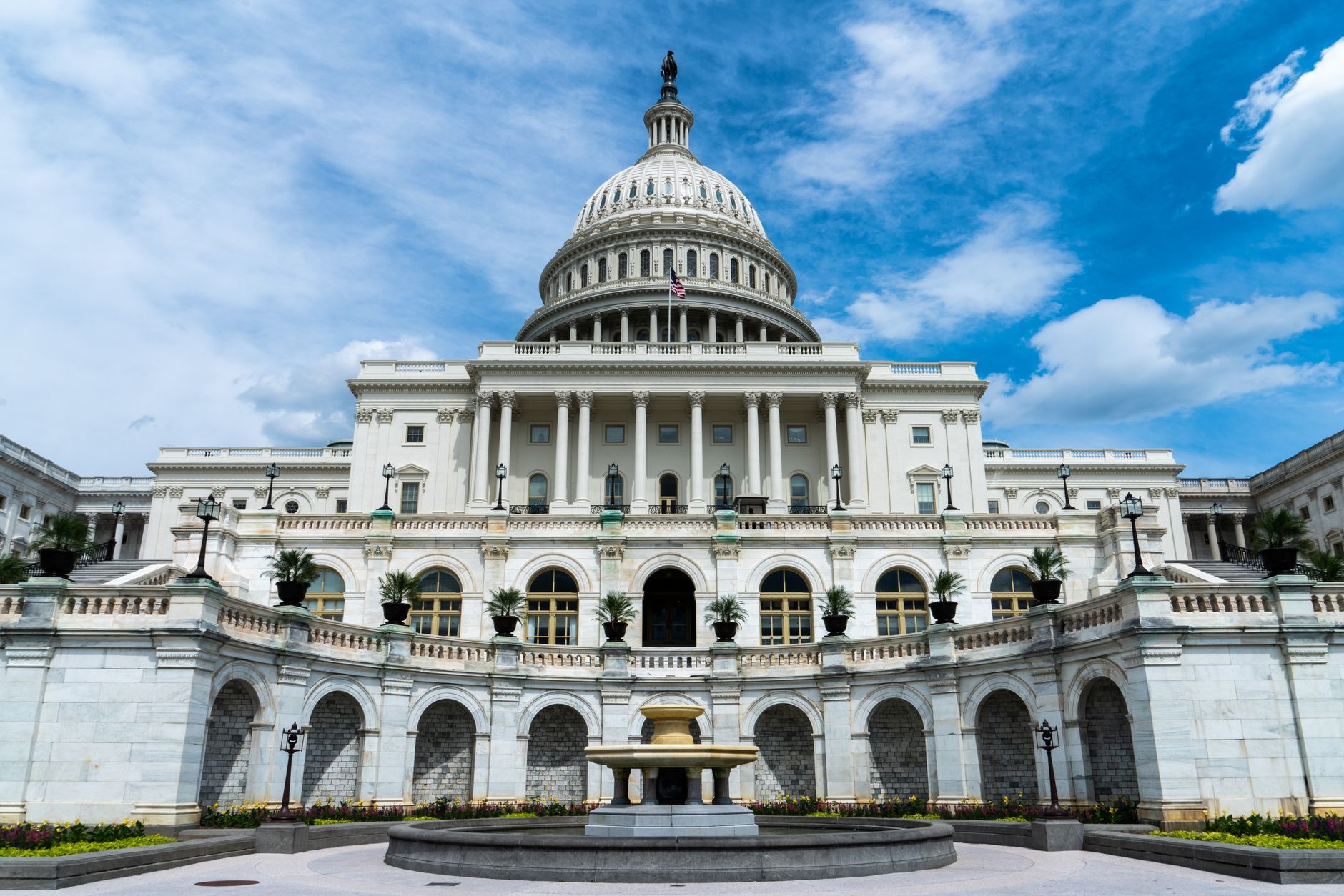
Michigan taxpayers funded travel and expense reimbursements for lame duck lawmakers who didn’t bother showing up to the Capitol during the final weeks of the legislative session, raising pointed questions about a reimbursement system that operates largely on the honor system.
The lawmakers in question had already lost their reelection bids or chosen not to run again. Their political careers were over. Yet the expense checks kept coming, drawn from public funds, for days when they were absent from the chamber floor.
This isn’t a story about dramatic theft or brazen corruption. It’s a story about a system that lacks the basic controls most employers take for granted, and about elected officials who took advantage of that gap on their way out the door.
How Michigan’s Reimbursement System Works
Michigan legislators receive a base salary, currently set at $71,685 annually for rank-and-file members. On top of that salary, they collect per diem reimbursements for expenses tied to session days. These payments are meant to cover lodging, meals, and incidental costs that lawmakers incur while traveling to Lansing to do the public’s business.
The key phrase there is “to do the public’s business.” The system was designed around the assumption that if a legislator submits for reimbursement on a given day, that legislator was present and working. There is no strict, independent verification mechanism built into the process. Lawmakers largely self-certify their attendance and submit accordingly.
For most of the year, this operates without much scrutiny. But lame duck session, the period between the November election and the swearing in of a new legislature in January, creates a specific vulnerability. During lame duck, some legislators are already checked out, professionally and personally. They have job offers to pursue, offices to clear, constituents to stop returning calls to. The incentive structure that normally keeps attendance honest, the desire to stay in good standing with voters and party leadership, simply evaporates.
The No-Show Problem
The pattern documented during the most recent lame duck period shows that several outgoing lawmakers collected reimbursements on session days when records, floor votes, and committee logs indicate they were not present.
While a full accounting of which specific lawmakers collected what amounts requires a detailed cross-reference of expense reports and attendance records, the broader picture is clear enough: public money flowed to legislators who did not appear to be earning it.
This is not a partisan issue. Both parties have members who coasted through their final weeks. The phenomenon is structural, and it repeats itself after every election cycle where a significant number of incumbents are replaced.
The amounts per legislator may seem modest in isolation. Daily per diem rates in Michigan vary depending on distance from a lawmaker’s home district, but a legislator from a distant district can collect over $100 per session day for lodging and meals. Across multiple no-show days and a dozen or more outgoing members, the total taxpayer cost climbs into the thousands, potentially tens of thousands of dollars statewide.
Why Lame Duck Invites This
Lame duck session is constitutionally necessary. Michigan’s legislature needs to wrap up business, pass budgets, confirm appointments, and handle urgent matters before the new class takes over. But it also concentrates a large number of legislators who no longer face any electoral accountability, precisely at a moment when the public’s attention has shifted away from the Capitol.
Leadership in both chambers technically retains the power to discipline members for attendance failures. Rules exist on paper. But enforcing those rules against colleagues who are walking out the door in weeks carries little practical weight. Nobody gets censured in December for missing days they were already planning to skip anyway.
The absence of automatic clawback provisions makes this worse. If a private employer discovers that an employee filed expense reports for days they didn’t work, the employer can recover that money. Michigan’s legislative expense system has no equivalent mechanism. Once a reimbursement is processed, recovering it requires a formal finding of wrongdoing and a political will to pursue it that historically has not materialized.
The Transparency Gap
Part of what makes this problem persistent is that it’s genuinely hard for outsiders to track in real time. Expense reports are technically public records, but accessing them requires knowing what to ask for, when to ask, and then doing the tedious work of matching those reports against daily attendance logs. Journalists and civic groups can do this work after the fact, but by then the money is gone and the lawmakers are private citizens.
Michigan does not publish a real-time, searchable dashboard of legislative expense claims cross-referenced against attendance. Several states have moved toward this kind of transparency infrastructure. Michigan has not.
The Citizens Research Council of Michigan and other policy-focused organizations have pushed for stronger disclosure requirements around legislative expenses for years. The argument isn’t complicated: if the public is paying for it, the public should be able to see it in a format that doesn’t require a records request and a spreadsheet.
What Reform Would Look Like
Fixing this doesn’t require a constitutional amendment or a sweeping overhaul of how the legislature operates. Several targeted changes would close the most obvious loopholes.
Attendance verification could be tied to biometric check-in systems or, at minimum, to floor vote participation as a prerequisite for per diem eligibility on a given day. If you didn’t vote and didn’t sign in, you don’t get the per diem.
Expense reports could be published online on a rolling basis, ideally within two weeks of submission, in a machine-readable format that makes cross-referencing easy. Right now, the lag between expense submission and public availability is long enough that accountability journalism is almost always retrospective.
The legislature could also adopt a formal policy requiring repayment of any reimbursements later found to have been claimed on days of unexcused absence. Putting that requirement in writing, with an actual enforcement mechanism attached, would change the calculus for outgoing members who might otherwise see no downside to submitting on days they didn’t work.
None of these reforms are radical. Most of them exist in some form in other state legislatures. The question is whether Michigan’s incoming members have the appetite to impose them on themselves.
Accountability Starts With Naming the System
It would be satisfying to present this as a story about specific bad actors who consciously defrauded the public. A few of them may well have done exactly that. But the more accurate framing is that the system made it easy to do the wrong thing and hard to get caught.
Legislators who submitted reimbursements for no-show days operated within a framework that didn’t stop them. Some may have told themselves they were still doing constituent work from home, still technically on call, still deserving of the payment. The system never pushed back.
That’s the accountability failure worth focusing on. Individual misconduct matters, but individual misconduct in a broken system produces predictable, recurring harm. The goal isn’t just to catch the last round of offenders. It’s to build a system that makes the next round impossible.
Michigan’s legislature will seat a new class of members in the coming months. Some of them ran on accountability platforms and made pledges about government transparency. The lame duck reimbursement problem is a small but specific test of whether those pledges translate into action.
Writing a bill to require real-time expense disclosure takes a few pages and a committed sponsor. Passing it requires leadership that cares more about institutional integrity than protecting the informal norms that benefit incumbents. That’s a harder bar to clear, but it’s not an impossible one.
Taxpayers who funded those no-show reimbursements deserve a system that treats their money with more discipline than Michigan’s legislature currently applies to its own expense accounts.