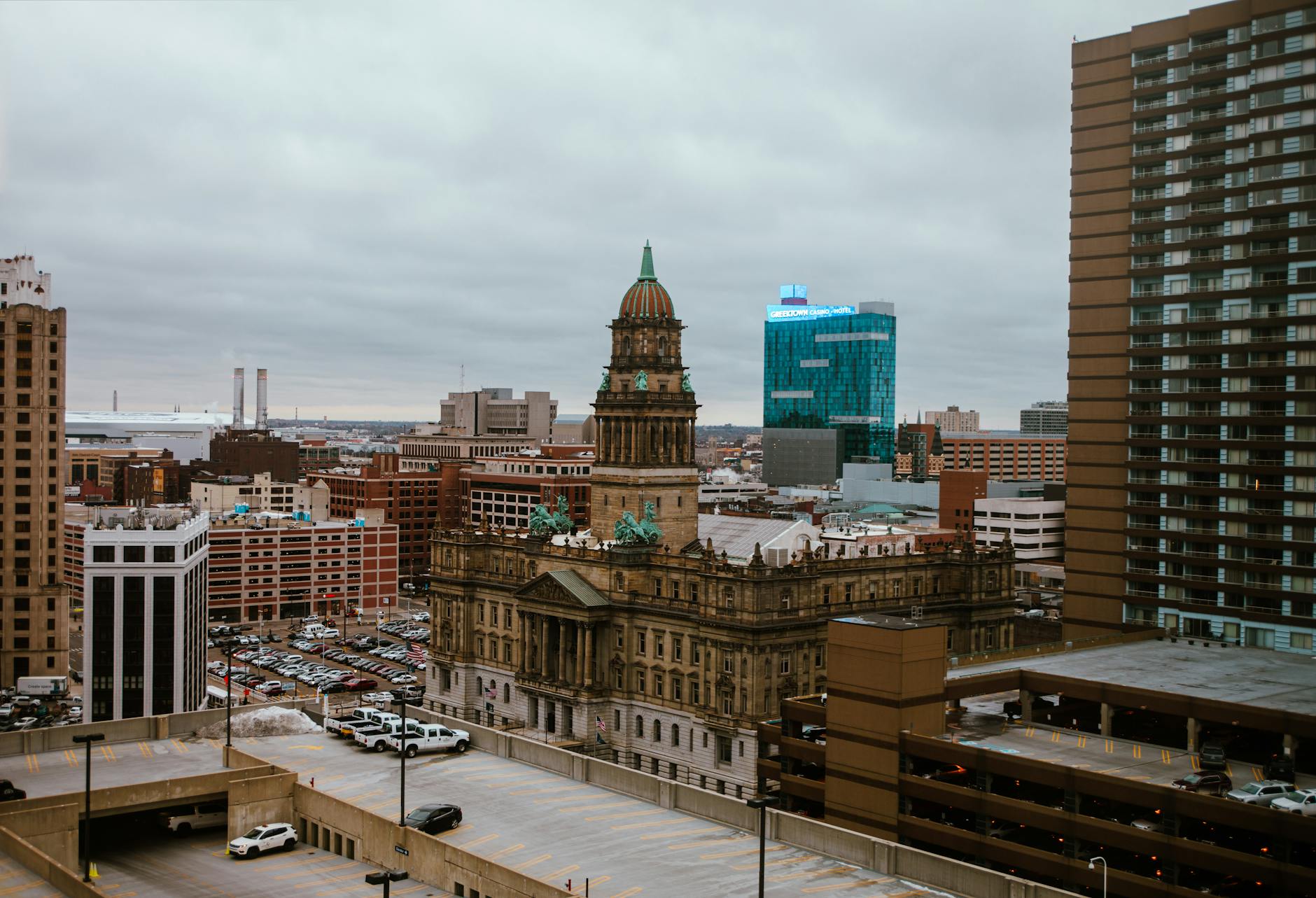
Detroit’s median home price has crossed the $100,000 threshold for the first time since the 2008 financial crisis, marking a significant milestone in the city’s real estate recovery and signaling renewed investor confidence in neighborhoods that were decimated during the foreclosure crisis.
According to data released this week by the Detroit Regional Association of Realtors, the median sale price for homes in Detroit hit $102,500 in January 2026, up from $98,200 in January 2025. The year-over-year increase of 4.4 percent represents the strongest growth in the past three years and caps a dramatic turnaround for a housing market that bottomed out at $7,500 in 2009.
“This is a watershed moment,” said Jennifer Richardson, president of the Detroit Regional Association of Realtors. “When the median price was in the single digits, people thought Detroit’s real estate market would never recover. Now we’re seeing genuine demand from both owner-occupants and investors who see real opportunity here.”
The recovery has been uneven across the city. While neighborhoods like Corktown, Midtown, and Downtown have seen dramatic price appreciation over the past decade, many areas on the East and West Sides remain significantly undervalued compared to pre-crisis levels.
The Long Recovery
The 2008 financial crisis hit Detroit’s housing market with devastating force. As the auto industry collapsed and unemployment soared above 25 percent in some neighborhoods, foreclosures flooded the market. By 2009, median home prices had plummeted to their lowest point, and many homes were selling for less than the cost of the land they sat on.
Over the next decade, the market remained sluggish. Population losses, continued economic uncertainty, and the perception that Detroit was a dying city kept many potential buyers away. It was not until 2015 and 2016, when major corporate investments began flowing into downtown areas and the auto industry stabilized, that the market showed signs of genuine life.
Since 2016, home values have climbed steadily. The $100,000 milestone comes during a period of accelerating growth. Last year alone, 5,247 homes sold in Detroit, up 12 percent from 2024.
Where the Growth is Happening
The median price increase masks significant variations across the city. In Corktown, median prices have exceeded $300,000, and bidding wars are common on renovated Victorian homes. In Midtown, around Wayne State University, prices have reached $180,000 to $220,000 depending on exact location and condition.
Meanwhile, in neighborhoods like Brightmoor, Grandriver, and East English Village, median prices remain below $50,000, though even these areas are seeing uptick in activity from investors and homebuyers seeking affordability.
“The bifurcation is real,” said Marcus Johnson, principal analyst at the Michigan Real Estate Institute. “We’re not seeing uniform recovery across Detroit. What we’re seeing is selective investment in neighborhoods with strong fundamentals: good schools, walkability, access to jobs, or cultural amenities. That’s driving demand in certain pockets while other neighborhoods remain dormant.”
Investor Interest Driving Numbers
A significant portion of Detroit’s recent sales volume comes from investors rather than owner-occupants. According to data from Redfin, investors purchased 28 percent of Detroit homes sold in 2025, compared to a national average of 16 percent.
Michael Chen, founder of Detroit Realty Partners, a local investment firm that has purchased over 300 properties in the past five years, attributes this activity to genuine improvement in fundamentals.
“We’re past the point where Detroit is a pure speculation play,” Chen said. “We now have demonstrable economic growth. The auto plants are operating near capacity. Young professionals are moving here. There’s real demand for rental housing. That’s what drives sustainable price appreciation.”
Chen’s firm is now focusing on stabilizing neighborhoods in districts outside downtown. They are renovating homes in Sherwood Forest and West Village, with the goal of creating blocks where property values reinforce each other.
Challenges Ahead
Despite the optimism, significant challenges remain. Detroit’s population of roughly 640,000 is still far below the 1.8 million residents the city had in 1950. School quality remains uneven, with Detroit Public Schools serving a largely low-income population. Crime rates, while improving, remain above national averages in many neighborhoods.
Additionally, many longtime residents worry about displacement. Rapid gentrification in Corktown and nearby neighborhoods has already priced out some families who lived there for generations.
“We celebrate this milestone, but we need to be thoughtful about who benefits from appreciation,” said City Councilwoman Sonja Braun. “We need policies that allow longtime residents to build wealth alongside newcomers and investors.”
The city government is exploring strategies including community land trusts, first-time homebuyer programs, and property tax relief for long-term residents.
What’s Next
Realtor Richardson expects continued growth, though she cautioned against assuming linear progression. National economic conditions, interest rates, and broader trends in urban migration will all influence Detroit’s trajectory.
“The $100,000 median is significant psychologically and practically,” Richardson said. “It signals that Detroit is a legitimate real estate market again. But sustainability depends on continued economic growth and broader population trends. We’re not out of the woods yet, but we’re definitely headed in the right direction.”