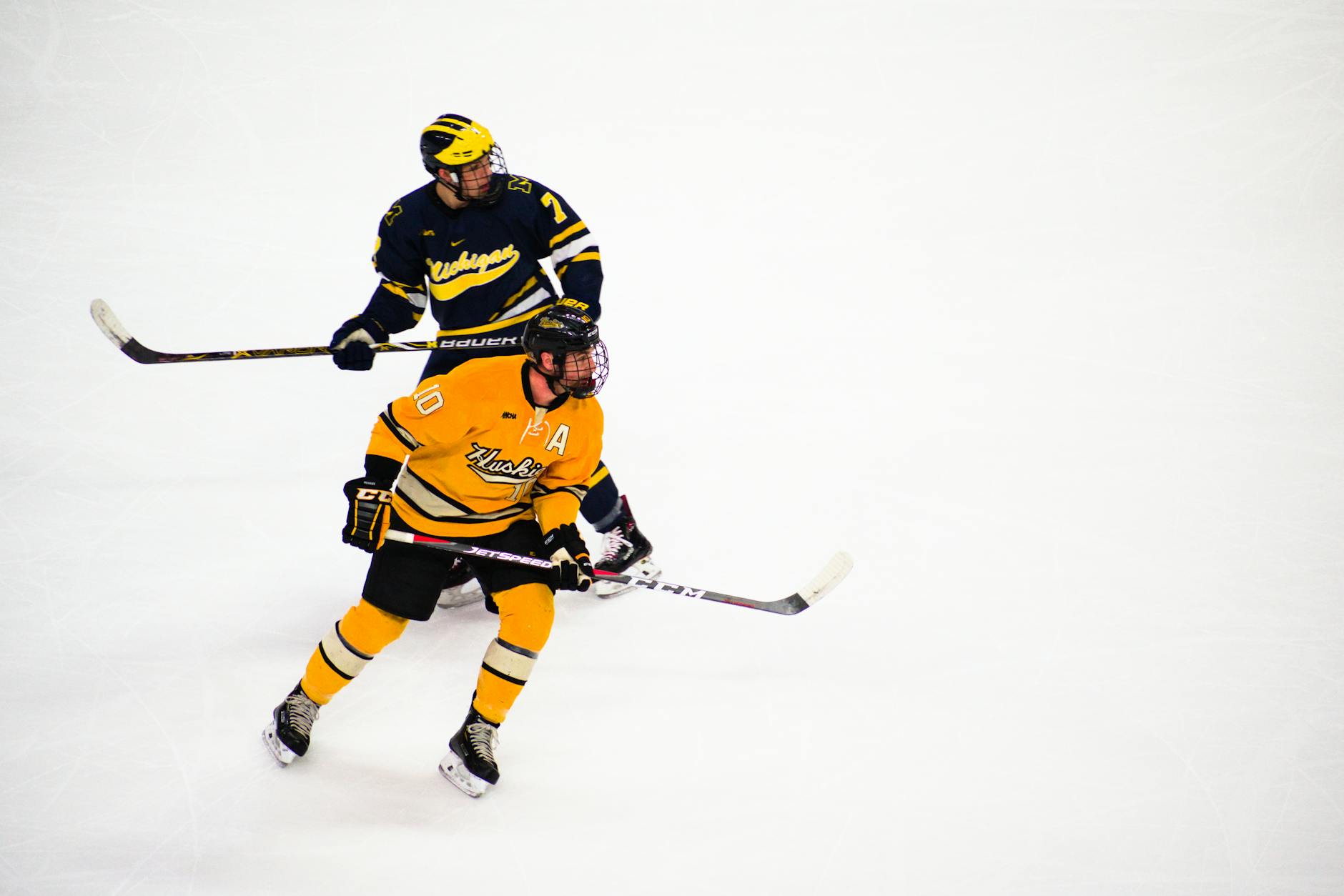
The Michigan Wolverines came into the third period staring at a deficit, staring at Ohio State, and staring down the very real possibility of watching a Big Ten championship slip through their fingers. Then something clicked. Four goals. One period. One title.
Michigan hockey owns the Big Ten championship again, and the way they seized it makes the trophy feel that much heavier.
The Wolverines erupted for four third-period goals to erase the Buckeyes and claim the conference crown in the kind of performance that reminds everyone why Ann Arbor remains one of college hockey’s most electric addresses. This wasn’t a tidy, wire-to-wire win. This was a gut-check, a statement, and a gut-punch to Ohio State all wrapped into twenty frantic minutes of hockey that Michigan fans will talk about for years.
When Michigan Woke Up
There’s a specific kind of pressure that builds when a rivalry game tightens at the wrong moment. Ohio State knows how to apply it. The Buckeyes have built genuine program credibility over the past decade, and they showed up to this Big Ten championship ready to spoil Michigan’s party. For two periods, they did exactly that.
But Michigan hockey has developed a resilience that defines this current era of the program. Head coach Brandon Naurato has constructed a roster that doesn’t flinch when the moment gets heavy, and the third period proved it. The Wolverines didn’t just score four goals. They scored four goals against Ohio State, in a championship game, when everything was on the line. The degree of difficulty matters.
College hockey’s unwritten rule says that the team that strikes first in a tight third period usually wins. Michigan didn’t just strike first. They kept striking. The Buckeyes never found an answer, and by the time Ohio State’s bench processed what was happening, the deficit was too deep and the clock too short.
The Rivalry Dimension
Let’s not sanitize this. Michigan versus Ohio State isn’t just a hockey game. It’s a civilization dispute. It runs through football, basketball, recruiting trails, and now, emphatically, ice. Every time these two programs meet with hardware on the line, the stakes feel amplified beyond the sport itself.
Ohio State has invested heavily in its hockey program, and that investment has paid off. The Buckeyes are no longer the opponent Michigan expects to handle easily. That’s actually what makes this championship more meaningful. Michigan didn’t beat a pushover. They beat a legitimate rival, on a big stage, after the rival had them cornered.
That context sits underneath every goal Michigan scored in that third period. This wasn’t just Michigan being Michigan. This was Michigan proving something to a program that has genuinely challenged their Big Ten supremacy. The Wolverines answered the challenge in the loudest possible way.
For Michigan fans across metro Detroit, across the state, and scattered through the hockey-loving corners of the Midwest, Sunday morning tastes like a championship. That rivalry edge makes it sweeter.
What This Means for the NCAA Tournament
Michigan hockey doesn’t just get to celebrate this weekend. They get to carry momentum.
The Big Ten championship carries real weight when the NCAA tournament selection committee starts drawing up the bracket. Conference tournament wins signal peaking at the right time, and Michigan’s four-goal explosion in a pressure championship game sends exactly the message programs want to send in March. This team scores. This team competes. This team doesn’t wilt.
The Wolverines’ positioning for the national tournament strengthens considerably after this run. A program’s resume builds on moments exactly like this one. A come-from-behind championship victory over a rivalry opponent checks every box the committee wants to see. Michigan enters NCAA tournament play with full confidence, a strong bracket seed profile, and a locker room that has now experienced winning ugly and turning it into something beautiful.
The third period against Ohio State becomes a touchstone. When Michigan faces adversity in the NCAA tournament, and every deep run involves some form of adversity, players and coaches will point back to this game. They’ve already proven they can do it. That psychological ledger matters.
Naurato’s Program and the Bigger Story
Brandon Naurato took over the Michigan program and immediately started reshaping it. The Wolverines have serious talent, they always have, but Naurato has added something tougher to quantify. He’s built a team that knows how to win when winning requires something extra.
Michigan hockey’s recent history includes the emotional weight of Mel Pearson’s tenure and the transition period that followed. Programs that have experienced that kind of institutional shift sometimes take years to fully restabilize. Michigan hasn’t needed years. The Wolverines have competed at a high level and now they’ve added a Big Ten championship to the current era’s resume.
The recruiting pipeline that flows through Ann Arbor has always pulled elite talent. Michigan’s brand in college hockey is national, not regional. Kids from hockey hotbeds across North America grow up knowing about the maize and blue. Winning the Big Ten championship reinforces that brand with every recruit watching this weekend’s result. Michigan hockey wins championships. That message markets itself.
The program’s resurgence looks less like a rebuild and more like a recalibration. The talent never stopped arriving. The system and the culture needed alignment. Four goals in a third period against Ohio State in a championship game suggests that alignment has arrived.
The City’s Team
Detroit doesn’t own Michigan the way it owns the Red Wings, Tigers, Lions, or Pistons. Michigan belongs to the whole state and beyond. But this city has a deep, particular relationship with college hockey. The Red Wings dynasty generations grew up watching and playing the sport at every level. Hockey runs through Detroit’s identity in ways that other cities can’t replicate.
When Michigan wins a hockey championship, Detroit feels it. The fans who fill Little Caesars Arena for Red Wings games, who coach youth hockey in the suburbs, who grew up skating on frozen ponds and outdoor rinks across southeast Michigan, all of them feel a pulse of pride when the Wolverines win big.
The Big Ten championship coming back to Ann Arbor means something in this region. It’s not just a trophy for a university. It’s validation for a hockey culture that this city and this state have nurtured for generations. Michigan hockey winning reinforces the idea that this part of the country produces and sustains elite hockey, at every level, from pond to program.
Four Goals and a Trophy
Strip away the narrative and the rivalry heat for just a moment and appreciate what happened on the ice. A team trailed, then scored four times in one period to win a championship. That’s not common. That’s not routine. That takes skill, courage, and a locker room that refuses to accept the alternative.
Michigan hockey manufactured a legendary third period when a lesser team would have accepted defeat. That’s the story. Everything else, the rivalry angle, the tournament implications, the program trajectory, all of it builds on that foundational fact. The Wolverines went out and took something that required everything they had.
Ohio State will regroup. The Buckeyes program has too much invested and too much talent to stay down long. That rivalry will continue producing moments like this one, and Michigan fans should want it that way. A worthy rival makes a championship more meaningful.
But right now, on this Sunday morning, the trophy belongs to Michigan.
The Wolverines won the Big Ten championship with four goals in the third period against Ohio State, and for anyone who loves hockey and loves this program, that sentence reads like a celebration. Michigan hockey is back at the top of the conference, the NCAA tournament awaits, and that third period will live as long as people remember the 2026 season.
Ann Arbor earned something this weekend. Detroit felt it. Michigan hockey delivered.