Kenya Henry didn’t expect to end up at 36th District Court fighting to keep her apartment. She lost her car to theft, then her job, then fell behind on rent, and by late March she was sitting inside one of Detroit’s busiest courtrooms hoping a free lawyer could save her housing.
Henry, 55, got that lawyer through Detroit’s Right to Counsel program. She’s one of thousands of low-income Detroiters the program has served since the city launched it in 2022. But the money keeping that program alive is running out, and city officials don’t yet have a clear answer for what comes next.
The numbers tell a stark story. Before Right to Counsel launched, 4% of eligible tenants who showed up to eviction hearings got full legal representation. By 2025, that figure was 94%, according to a recent Right to Counsel report. That shift happened in three years.
Now the program is staring down a funding cliff.
Right to Counsel has roughly $3 million in American Rescue Plan Act funds to spend through June 2026. Another $4 million in ARPA money follows, but that pot also has an end date. Federal pandemic relief dollars were never meant to be a permanent budget line, and Detroit City Council knew that when it passed the Right to Counsel ordinance in 2022. Long-term sustainability was a question on day one.
What’s at stake in room 417
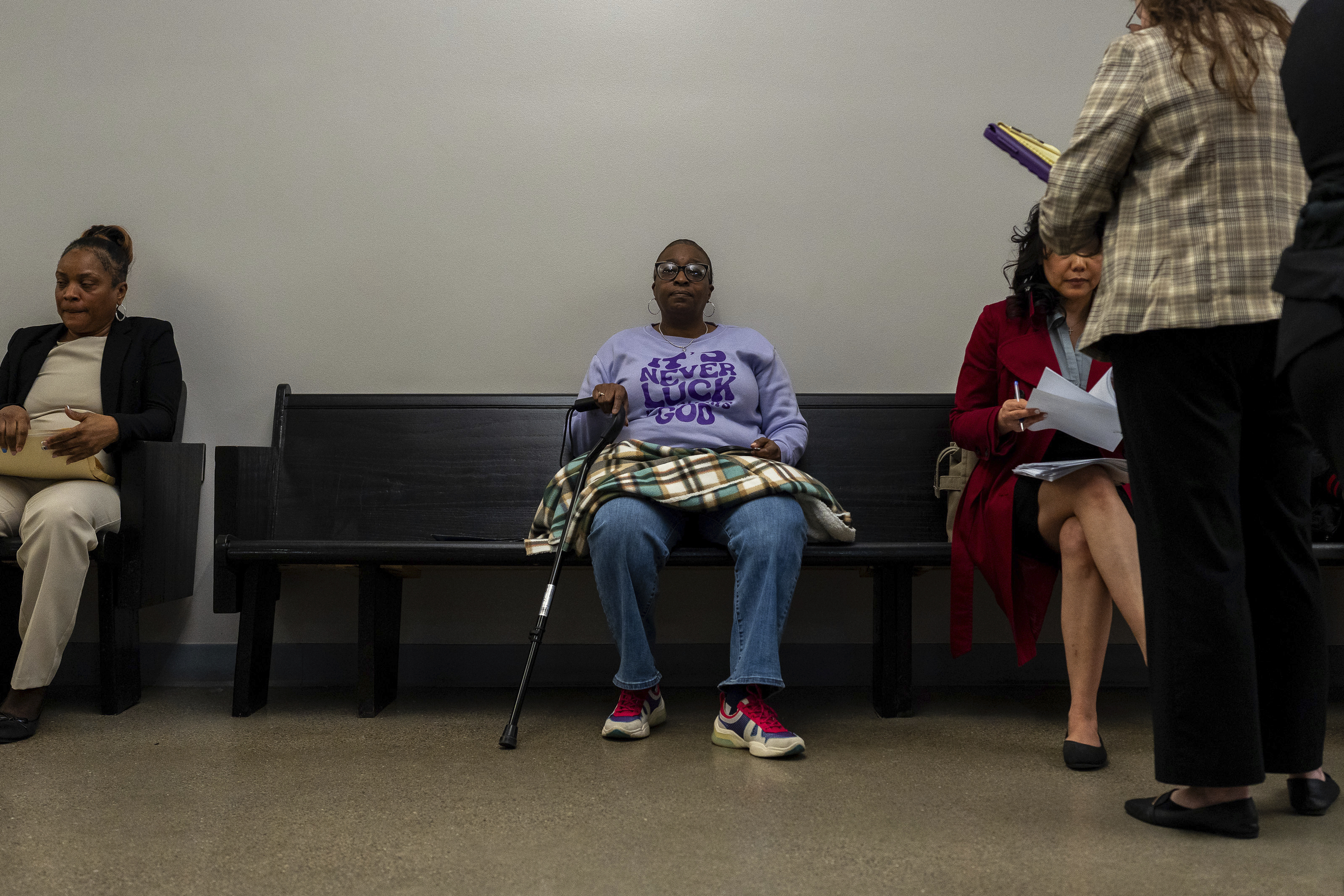
The program operates out of room 417 at 36th District Court, a small space with a waiting area on one side and attorney cubicles on the other. On a Friday morning in late March, about 100 cases were on the docket. Tenant advocates from multiple agencies moved through courthouse hallways near the eviction courtrooms. Sign-ins, consultations, and case reviews happened simultaneously.
“It is extremely hectic,” said Tony Degard, deputy director of Detroit eviction prevention at Lakeshore Legal Aid. Lakeshore is one of five organizations running the Right to Counsel program under contract with the city.
Degard and the other advocates aren’t just showing up to courtrooms. They’re connecting clients to services, identifying repair issues that might constitute a legal defense, and in some cases helping tenants negotiate payment plans instead of heading to a hearing at all. That broader role disappears if funding shrinks and the attorney workforce with it.
Henry’s situation shows how fast things can spiral for Detroit renters. After her car was stolen, she couldn’t get to work and lost her job. She fell behind on rent. She slipped on ice outside her building and was using a cane by the time she appeared in court. She had been homeless before finding her current place. When her landlord filed for eviction, Bridge Detroit reported, she had no savings cushion and no legal knowledge to fall back on.
“It was like a domino effect,” Henry said.
She also said she had gone without heat in the apartment, relying on her oven for warmth. That detail matters legally. Habitability problems can be a defense in eviction proceedings, but tenants who show up without attorneys rarely know how to raise them.
The city’s next move
Detroit City Council’s 2022 ordinance created the legal framework. It didn’t lock in permanent revenue. The city now has to figure out whether to fold Right to Counsel into the general fund, pursue state support, find new grant sources, or some combination of all three. None of those paths is straightforward in a city that still carries significant budget constraints.
What’s not in dispute is the cost of letting the program contract. Detroit’s eviction rate has historically ranked among the highest of any major American city. The 36th District Court handles tens of thousands of landlord-tenant cases each year. A drop in legal representation doesn’t just hurt individual tenants, it pushes more families into homelessness and into shelters and services that cost the city money on the back end.
Tenant advocates are pressing city and state officials to identify dedicated funding before the ARPA clock runs out this summer. The Detroit City Council will likely face direct pressure to act before the June deadline arrives.
Henry left her March hearing with her case still unresolved, but with a lawyer working it. Whether the next tenant who walks into room 417 gets the same resource depends on decisions that city leaders have not yet made.