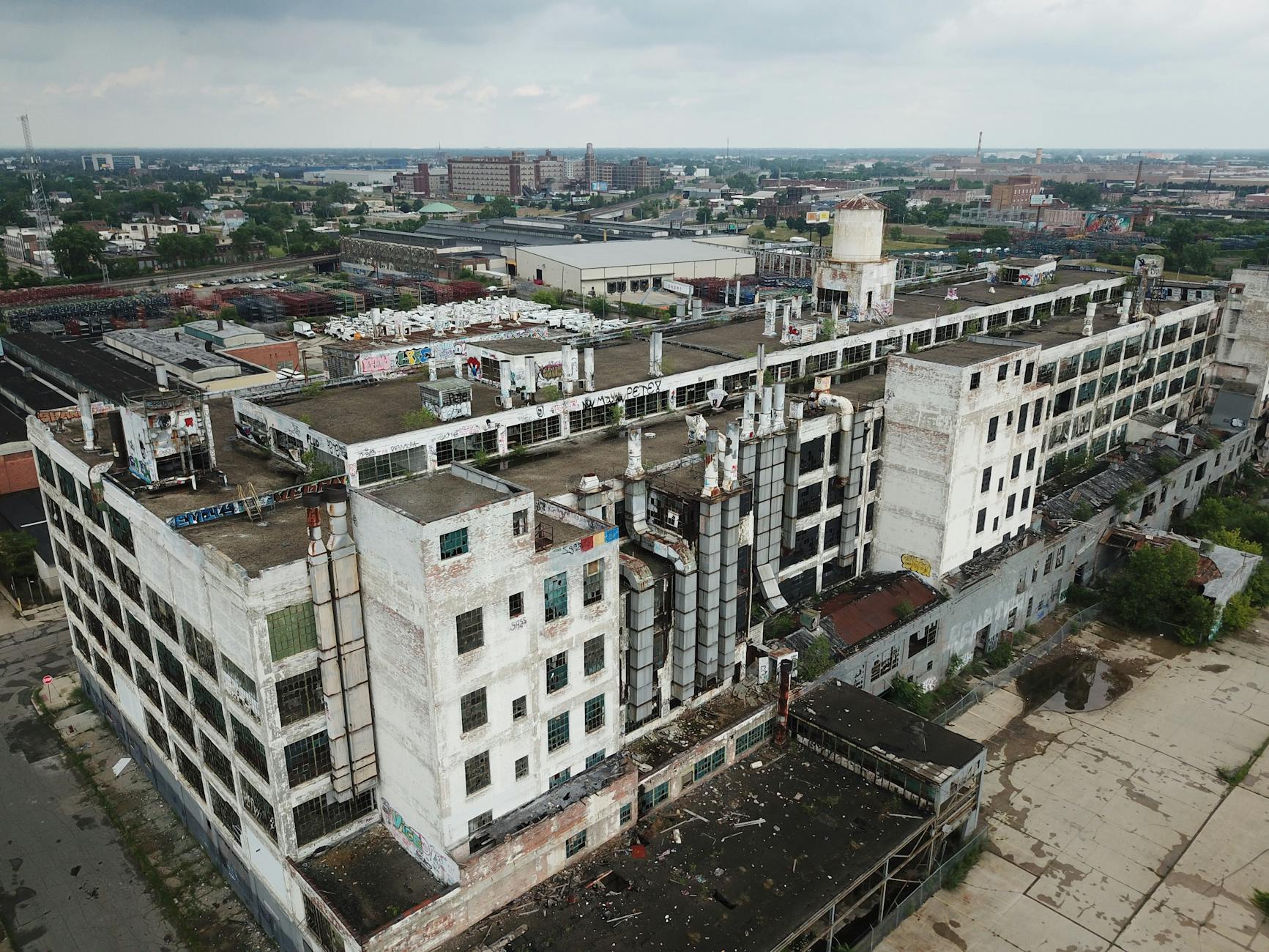
Southwest Detroit’s Springwells neighborhood sits within a 3-mile radius of 58 sources of air pollution. Four of those facilities currently carry high-priority air quality violations. For Alexandra Castro, 24, who grew up loving the culture and tight-knit community along those streets, that number puts a name to something she’s felt in her own body.
“This past year I had the worst case of seasonal allergies I have ever experienced. I had severe congestion, eczema, and a runny nose for over a month,” Castro said. “It decreased my quality of life and made me miserable.”
Castro’s experience isn’t unusual in Southwest Detroit, where residents have lived alongside heavy industry for decades. Schools, parks, churches, and front porches all sit downwind from facilities that, even when individually compliant with state rules, collectively expose the surrounding community to what environmental regulators call cumulative impact.
What cumulative impact actually means
The EPA defines cumulative impacts as “the totality of exposures to combinations of chemical and nonchemical stressors and their effects on health, well-being, and quality of life outcomes.” That’s a technical way of saying: it’s not just one smokestack. It’s 58 sources measured within 3 miles of one block club meeting spot, according to Planet Detroit’s air quality tracker, which pulls from EPA enforcement data.
Of those 58 sources near the Springdale-Woodmere block club, 53 are listed as compliant under the Clean Air Act. Compliance, though, only means each facility is meeting its individual permit terms. It doesn’t account for what happens when dozens of permitted sources operate simultaneously in the same ZIP code.
That gap is exactly what a bill in Lansing is trying to close.
The Protecting Overburdened Communities Act
State Rep. Donavan McKinney and Sen. Stephanie Chang, both Detroit Democrats, introduced the Protecting Overburdened Communities Act in July 2025. The legislation would require the Michigan Department of Environment, Great Lakes, and Energy, known as EGLE, to consider the total regional health burden when issuing new facility permits. Right now, EGLE reviews each permit application in isolation. Under the proposed law, a new industrial facility near Dearborn Street couldn’t get a green light without regulators first accounting for the pollution load the surrounding community already carries.
EGLE spokesperson Josef Stephens said in a statement that the state currently can’t use cumulative impact data when making permitting decisions, a constraint the Protecting Overburdened Communities Act would directly address.
The bill hasn’t moved to a floor vote yet.
Federal rollbacks make the stakes higher
Legislation in Lansing is moving against a strong federal current. President Donald Trump has rolled back environmental protections at the federal level and issued pollution exemptions to facilities including DTE Energy’s EES Coke Battery on Zug Island. That plant sits less than two miles from residential blocks in Southwest Detroit.
Donald Spurr, 78, a Southwest Detroit resident who survived both throat and lung cancer, told reporters he keeps asking the same question: when will it get better?
That question doesn’t have a clean answer right now. As detailed reporting on cumulative pollution exposure in the area shows, the data tools that exist, including Planet Detroit’s air quality tracker, can show residents exactly what surrounds them. What they can’t do yet is force a regulatory response.
What residents are watching
The Protecting Overburdened Communities Act sits in committee while the community it’s meant to help keeps breathing. Castro’s allergy flare-up lasted more than a month. Spurr carries the weight of a cancer diagnosis. These aren’t abstract policy outcomes. They’re the cost of a permitting system that’s never been required to add up.
If McKinney and Chang’s bill clears the Legislature, EGLE would need to build new assessment tools and data systems to evaluate cumulative regional impact before issuing permits. That’s not a small lift for a state agency already stretched thin. Environmental advocates in Southwest Detroit say it’s overdue by about 40 years.
The next committee hearing date hasn’t been set publicly. Residents near Springwells say they’re not holding their breath, though maybe not by choice.