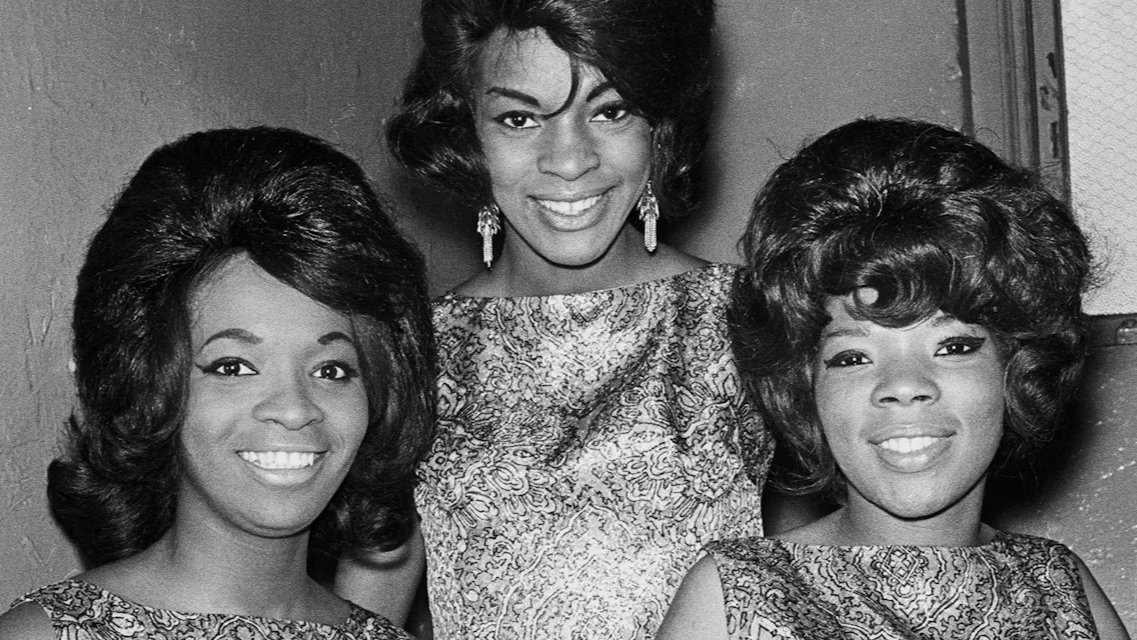
Martha Reeves was born in Eufaula, Alabama, on July 18, 1941. Her family didn’t stay south long.
They moved to Detroit’s east side when she was still small, settling into a neighborhood where music wasn’t entertainment so much as the air in the house. Her father played guitar. Her mother, Ruby, sang. By the time Reeves joined her church choir, she was already practicing something she’d do professionally for the rest of her life. “At that young age I was already hooked on pleasing the crowd with my singing,” she wrote in her 1994 memoir, “Dancing in the Street: Confessions of a Motown Diva.”
She graduated from Northeastern High School and started working the open mic circuit the way serious singers did in Eastside Detroit back then: consistently, hungrily, and on fake IDs when necessary. The 20 Grand, the legendary nightclub at 14th Street and Warren Avenue, gave her the stage that mattered. Three nights there put her in front of William Stevenson, a Motown Records talent executive who invited her to Hitsville U.S.A. on West Grand Boulevard. That visit didn’t just change her career. It changed American music.
What the Vandellas built at Motown over the following decade wasn’t polished in the way that implies distance from real life. Reeves, Rosalind Ashford, and Annette Beard formed the original lineup, and the group’s identity stayed planted in working-class Black Detroit through every personnel shift across three decades. They didn’t perform like women who’d never been near a factory floor. As Bridge Detroit’s reporting on the group makes clear, that groundedness wasn’t incidental.
On June 28, 1965, CBS aired a performance from “It’s What’s Happening Baby” that stopped people cold. Martha and the Vandellas sat inside a white Mustang moving down the Ford Motor Co. River Rouge plant assembly line, singing “Dancing in the Street,” while autoworkers continued doing their jobs around them. The whole clip runs about three minutes. It’s one of the most recognized pieces of footage in American labor history.
Cultural and labor historians don’t treat that video as a coincidence. It connected two of Detroit’s most powerful institutions in a single frame, and it did so deliberately. Motown founder Berry Gordy Jr. had worked a Ford assembly line before he built Hitsville U.S.A. He modeled his recording studio on the factory system itself, running it as a hit-production operation designed for volume and precision. The River Rouge shoot wasn’t random. It was a reunion of two industries that shaped the same city, the same workforce, and the same people buying records in 1965. The Civil Rights Movement Archive and the National Women’s History Museum have both documented how that moment resonated beyond pop promotion.
Reeves herself understood what she represented. She didn’t just sing about the crowd. She came from it.
In 2025, 84 years after her birth and more than 20 years after her first congressional term, her legacy keeps accumulating context. She served in Detroit City Council, won a congressional seat in 1994, and never really disconnected from the east side that raised her. From Eufaula to Eastside Detroit is a long geographic line, but it’s a straight one when you trace it through her biography.
The Vandellas recorded “Nowhere to Run” as a song about romantic obsession, 28 words into the lyric before the hook even lands. But sitting in that Mustang at River Rouge in 1965, surrounded by 18 autoworkers who weren’t extras but employees on a real shift, the song meant something wider. It was pop music doing what Detroit always did best: making something universal out of something intensely local.
“She represented a Detroit that worked for everything it had,” a spokesperson for the National Women’s History Museum said of Reeves in 2025, “and the footage at River Rouge shows exactly what that looked like.”
That footage doesn’t age. Neither does the address: River Rouge, Ford Motor Co., June 28, 1965.