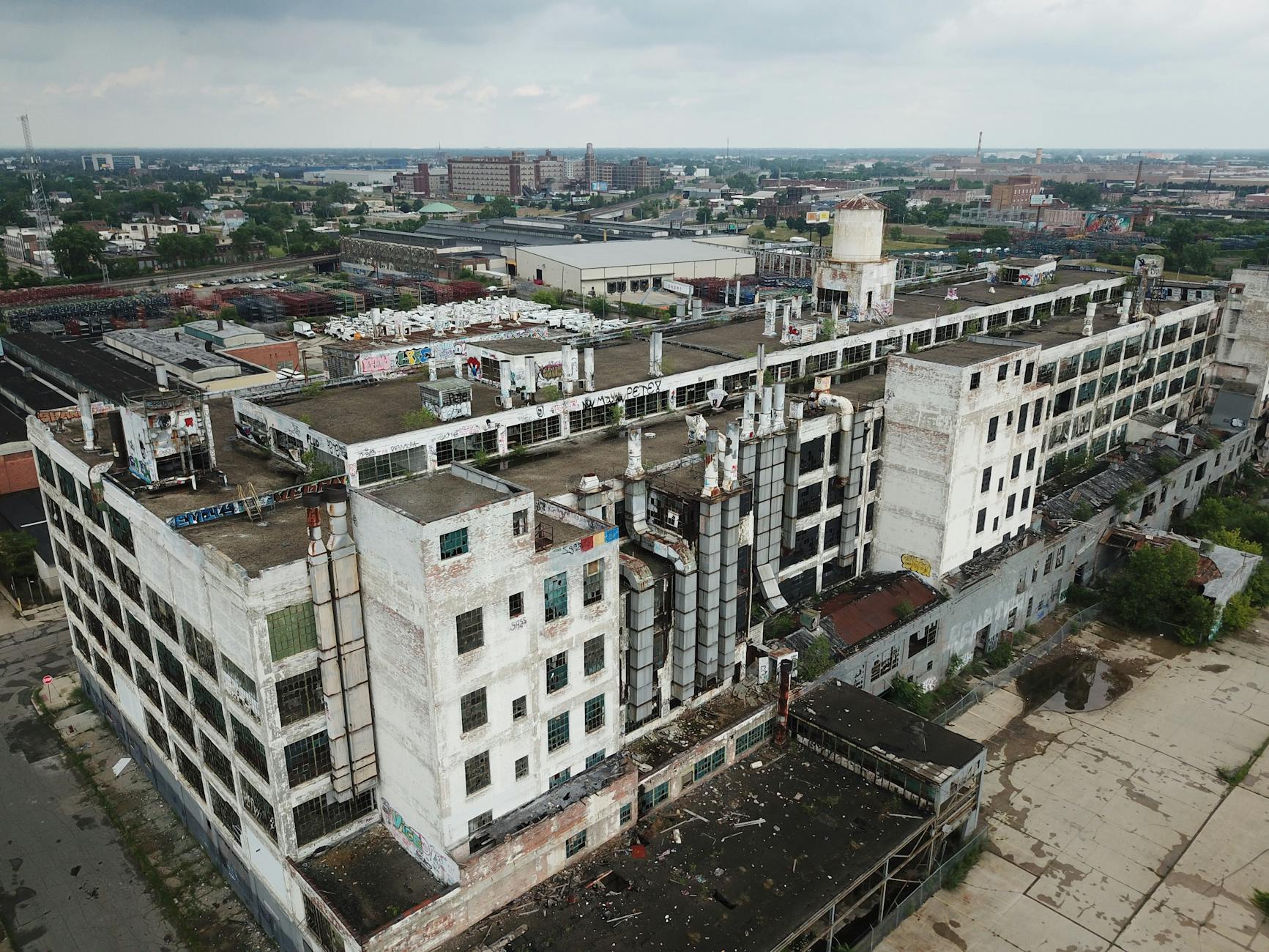
Fifty-eight pollution sources sit within a 3-mile radius of the Springwells neighborhood in Southwest Detroit. Four of them currently carry high-priority air quality violations. That’s not a statistic from a think tank report. It’s what Alexandra Castro, 24, lives with every time she walks out her front door.
“This past year I had the worst case of seasonal allergies I have ever experienced. I had severe congestion, eczema, and a runny nose for over a month,” Castro said. “It decreased my quality of life and made me miserable.”
Castro grew up in this neighborhood because of what it is: tight streets, strong culture, people who know each other’s names. She didn’t choose the 58 facilities. Nobody did.
Southwest Detroit’s pollution story isn’t new. What’s new is that advocates and legislators now have the data infrastructure to actually quantify it. Planet Detroit’s air quality tracker, drawing directly from EPA enforcement records, counts those 58 sources measured near the Springdale-Woodmere block club area. Of those, 53 are listed as compliant under the Clean Air Act. Read that again. Fifty-three facilities meeting their legal obligations, and the neighborhood still can’t breathe right in allergy season.
That’s because compliance doesn’t mean clean. It means each facility is hitting its individual permit targets. It doesn’t measure what happens when dozens of stacks run simultaneously in the same ZIP code, pointed at the same block clubs, schools, and front porches. Detailed reporting on cumulative pollution exposure in the area shows just how layered that burden gets for Springwells residents specifically.
The EPA defines cumulative impacts as “the totality of exposures to combinations of chemical and nonchemical stressors and their effects on health, well-being, and quality of life outcomes.” Strip out the regulatory language and here’s what that means: it’s not one smokestack making Castro miserable for a month. It’s the combined load of 58 sources that individually pass their inspections but collectively produce something the permitting system wasn’t designed to measure.
That design flaw is what a bill introduced in Lansing in 2025 is trying to fix.
State Rep. Donavan McKinney and Sen. Stephanie Chang, both Detroit Democrats, introduced the Protecting Overburdened Communities Act in July 2025. The legislation would require the Michigan Department of Environment, Great Lakes, and Energy to weigh the total existing health burden on a community before issuing permits to new industrial facilities. Right now, EGLE reviews each application in isolation. One smokestack at a time. No accounting for what’s already in the air.
Under the proposed law, that changes. A new industrial facility near Dearborn Street couldn’t clear the permitting process without regulators first asking: what are the people who live here already breathing? EGLE spokesperson Josef Stephens confirmed in a statement that the state currently can’t incorporate cumulative impact data into permitting decisions, which is precisely the constraint the Protecting Overburdened Communities Act would remove.
The bill hasn’t reached a floor vote yet.
That delay matters more now than it would’ve three years ago. Federal environmental rollbacks under the current administration have weakened the backstop that communities like Springwells relied on when state oversight fell short. Lansing can’t wait for Washington to fix this. What the Protecting Overburdened Communities Act represents is a state-level attempt to fill a gap that’s getting wider, not smaller.
Castro’s story isn’t an outlier. It’s the expected outcome of a regulatory framework that counts individual permits but can’t see the neighborhood those permits collectively shape. Forty sources operating inside the legal limit. Fifty-three. Doesn’t matter how clean each one is on paper if the cumulative result is a 24-year-old woman who can’t leave the house for a month without her eyes swelling shut.
The Springdale-Woodmere block club keeps meeting. People show up. They track the numbers because nobody else was doing it for them. And they’re watching Lansing.