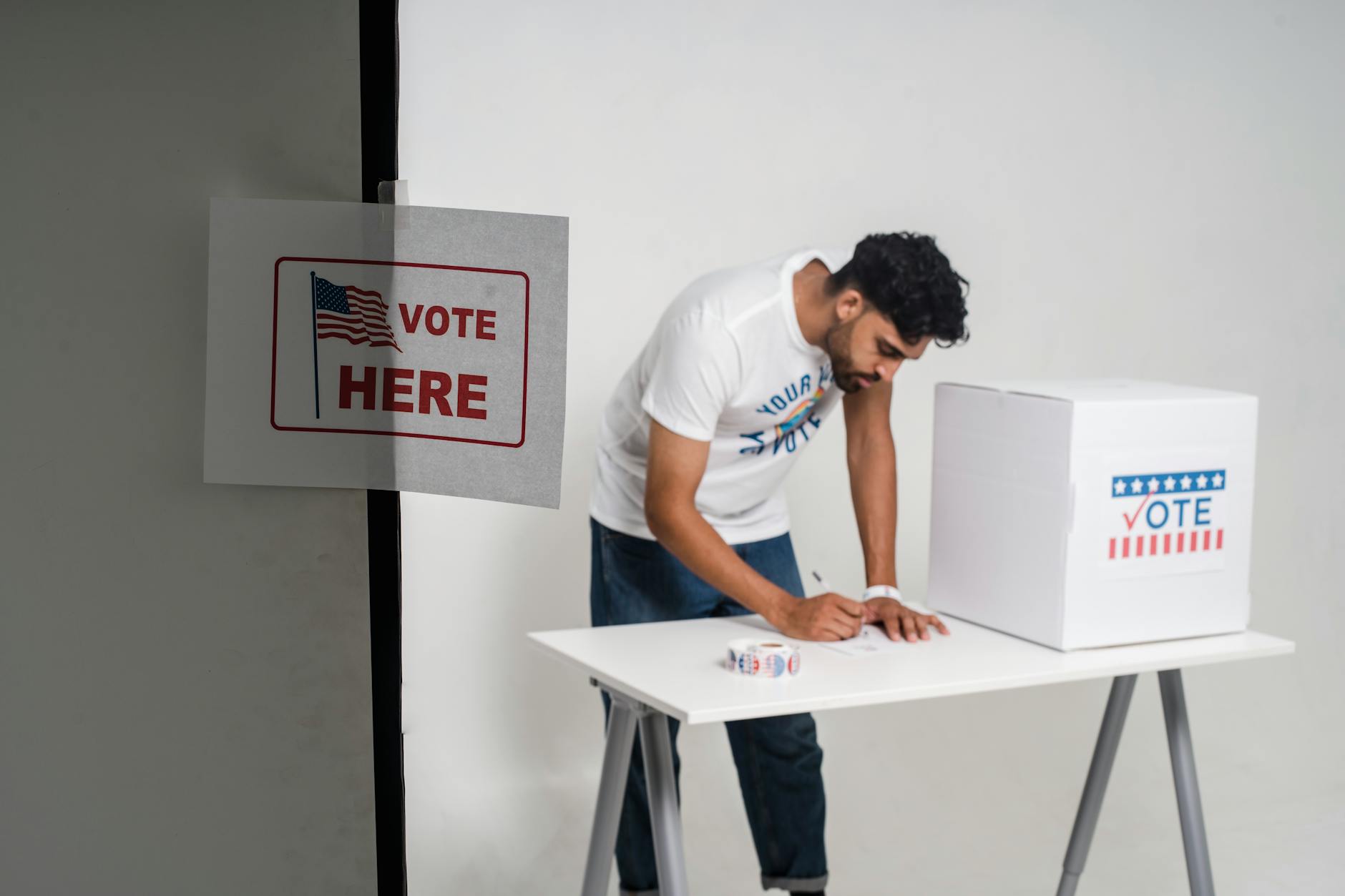
The Michigan House passed House Bill 4765 on Tuesday along a strict party-line vote, pushing stricter voter identification requirements toward a Democratic-controlled Senate that’s unlikely to welcome it.
Every Republican voted yes. Every Democrat voted no.
The bill comes from Rep. Jason Woolford, a Republican from Howell, and it would require proof of U.S. citizenship at registration and photo ID at the polls. It tracks closely with the federal SAVE Act that Republicans in Washington have been pushing through Congress. Woolford didn’t mince words after the vote. “Election integrity should not be controversial,” he said. “As lawmakers, we owe it to the people of Michigan to guarantee that only U.S. citizens are voting. For too long, our elections have been vulnerable to interference.”
The House Election Integrity Committee cleared the bill in March, even as Democrats raised concerns about which specific documents would legally qualify under its language.
What Changes at the Polls
Right now, a standard Michigan driver’s license gets you to the ballot. Under House Bill 4765, that’s not enough anymore for registration. Voters would need an enhanced driver’s license or supplemental citizenship documents, specifically a birth certificate or passport, before they can complete the process.
For a lot of Detroiters, that’s not a formality. It’s a barrier. A U.S. passport runs $130 in application fees alone, before you factor in photos or expediting costs. Enhanced driver’s licenses aren’t something you grab on a lunch break either. They require a dedicated trip to a Secretary of State branch with the right documents in hand. Find the nearest location using the Michigan Department of State’s branch locator. Branch wait times in Wayne County can run for hours, and that’s on a good day.
Monique Stanton, President and CEO of the Michigan League for Public Policy, told Michigan Advance that the bill’s real-world effect doesn’t match its stated purpose. “On the surface, this bill may look like it’s about voter identification and preventing so-called voter fraud, but it’s really about trying to make it more difficult for eligible citizens to exercise their right to vote in state elections,” she said.
Critics point out that it’s elderly residents, naturalized citizens, and low-income voters who are least likely to have these documents immediately available and most likely to be squeezed out by the new requirements. That’s not an abstract concern. It’s the lived reality for a significant chunk of Detroit’s electorate.
The Fraud Numbers Don’t Support the Alarm
Here’s what the actual data shows. Michigan’s Department of State reviewed voter registration records and found 15 cases of potential noncitizen voters across 5.7 million ballots cast in 2024. That’s 0.00026 percent. Fifteen people out of nearly six million.
Stanton was direct about what those numbers mean: “This shows that the systems the state has in place to prevent voter fraud are already working.”
Noncitizen voting isn’t legal. It hasn’t been legal. Nobody on either side of this debate disputes that. Supporters of the bill argue HB 4765 adds an enforcement mechanism that makes the existing prohibition visible and verifiable. Opponents say the burden of that verification doesn’t fall evenly, and it won’t.
The National Conference of State Legislatures tracks voter ID laws across the country. Michigan would join a growing list of states tightening these requirements, though the specific combination of citizenship documentation at registration and photo ID at the polls puts it among the more restrictive proposals in the current 2026 legislative cycle.
What happens next is fairly predictable. The bill moves to the Senate, where Democrats hold the majority and have zero incentive to pass it as written. Whether there’s any version of this legislation that could clear both chambers in its current form is a harder question. The 2024 election cycle already demonstrated that voter turnout, not fraud prevention, tends to determine outcomes in Michigan. Woolford’s bill won’t change that math in the Senate chamber.