Shavonne Coleman has spent years acting, writing, and coaching youth productions across Michigan and the country. Her professional directorial debut, though, put her somewhere new.
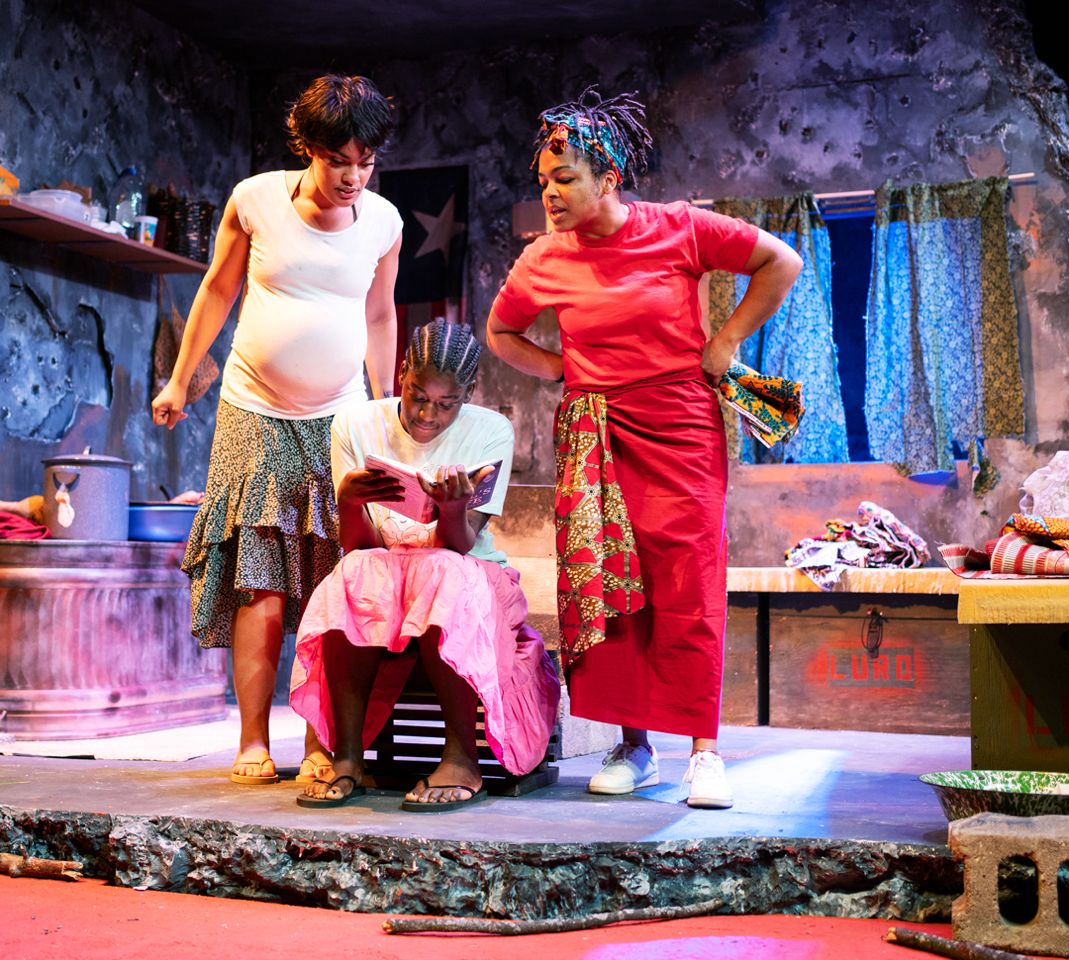
Coleman, a Detroit-based actress and assistant professor at the University of Michigan, is directing “Eclipsed” at the Detroit Repertory Theatre through May 17. The production marks the first time Coleman has helmed a fully professional stage production, and she’s doing it with a play that doesn’t let an audience look away.
The Play and the Story Behind It
“Eclipsed” was written by Danai Gurira, the actress and playwright known for her roles in “Black Panther” and “The Walking Dead.” The play premiered at the Woolly Mammoth Theatre Company in Washington, D.C., in 2009, and made its Broadway debut in 2016 with Lupita Nyong’o in the cast.
The story is set in Liberia in 2003, near the close of the Second Liberian Civil War. That conflict, which ran from 1999 to 2003, began when a rebel group called Liberians United for Reconciliation and Democracy launched a military offensive against then-President Charles Taylor. It followed the First Liberian Civil War, which had ended only two years earlier after stretching from 1989 to 1997. Thousands died. Child soldiers were recruited and used by armed factions throughout both conflicts.
What Gurira’s script does is shift the frame. Five women carry the story. Helena and Bessie, referred to as wives number one and three, have been kidnapped and sexually assaulted by a commanding officer. They watch over a teenager known only as “The Girl,” who becomes the officer’s next target. The three form a bond, surviving together in a shack. War surrounds them. It doesn’t define them.
Coleman’s Preparation
Coleman told BridgeDetroit she didn’t know much about the Second Liberian Civil War before taking the project. She read articles and watched documentaries to get the history right. One detail from that research stayed with her: Liberians in the documentaries kept talking about how they believed America would come to save them.
That kind of specificity mattered to Coleman. She wanted the production to carry real weight, not perform it.
“There were times where I felt pressure and then there were times where I felt like I was exactly in the room I was supposed to be, doing what I was supposed to be doing,” Coleman said. “While reading it, I had this moment of being like, ‘Yes, this is a story that needs to be told.’”
Balancing the Work and the People Doing It
Coleman’s background runs through multiple layers of Detroit’s arts world. She works with Mosaic Youth Theatre of Detroit, where she helps adapt scripts, direct productions, and coach young performers. At the University of Michigan, she’s an assistant professor in the theatre and drama department.
That experience shapes how she runs a rehearsal room. With “Eclipsed,” she has been working with actors who are making their own professional debuts. The subject matter, sexual violence and survival during wartime, demands that directors pay attention to more than blocking and line readings.
Mental health care for the cast has been part of her process. The material is not abstract. It describes things that happened to real women in a real war, and Coleman has treated it that way from the start.
The Detroit Repertory Theatre, located at 13103 Woodward Avenue in Highland Park, has run continuously since 1957 and has a long record of staging work that deals directly with race, identity, and survival. “Eclipsed” fits inside that tradition.
What to Watch
The production runs through May 17. For audiences who don’t know the history of the Liberian civil wars, Coleman’s research-grounded approach means the production treats its context as essential, not decorative. The Liberia section of the United Nations Peacebuilding Commission’s documentation gives some sense of the scale of what the country endured during that period.
Coleman came into this project having earned the room, through years of youth theater, classroom teaching, and community production work. The Detroit Repertory Theatre gave her the stage, and she brought the homework.