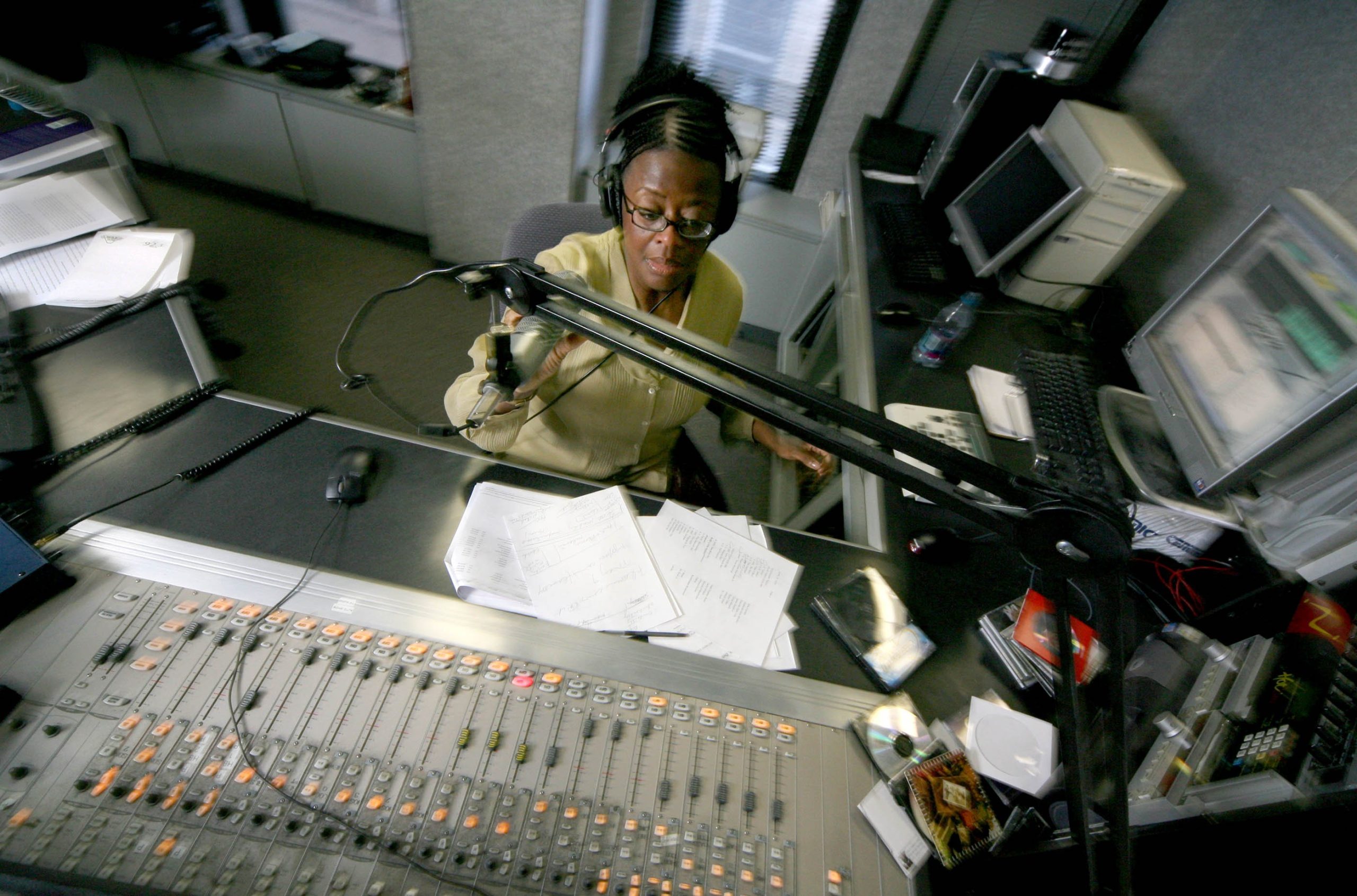
Deborah Smith Pollard, the gospel scholar, professor, radio host and author who spent decades shaping how Detroit understood its own sacred music traditions, died Sunday, April 12. She was 74.
Pollard taught English literature and humanities at the University of Michigan-Dearborn from 1995 until her retirement in 2023, and her reach went well past the classroom walls. Friends, mentees and colleagues remembered her this week as one of the foremost scholars of gospel music in the country, a woman whose faith animated her academic work and whose warmth drew students to her long after they had graduated.
“She was such a rare talent,” said Melba Joyce Boyd, Michigan’s poet laureate and a retired Wayne State University African American Studies professor who counted Pollard as a close friend. Boyd said the music was “in her bones.”
The loss landed hard in Detroit’s academic and gospel communities simultaneously, and that overlap was no accident. Pollard made both worlds her home.
A scholar who built something lasting
Pollard was a founding member of the University of Michigan-Dearborn’s African and African American Studies program and directed it for six years, building institutional infrastructure that outlasted her own tenure there. She earned her Ph.D. in American Studies from Michigan State University in 1994. Her book “When the Church Becomes Your Party” and her articles on contemporary gospel positioned her as a serious academic voice in a field that the broader academy had long undervalued. She retired in 2023 as professor emerita of English literature and humanities.
The daughter of a pastor and music minister, she didn’t arrive at gospel scholarship by accident. It was inheritance that became vocation.
Her classes on African American literature and gospel music drew students who found in her not just a lecturer but a guide. Detroit-based music writer Veronica Johnson was among those who said Pollard showed up for her students even after they had left campus.
Sunday mornings on Mix 92.3
Outside the university, Pollard was a familiar voice across Detroit through Sunday Morning Inspiration on Mix 92.3, a show that put her scholarship to work for a general audience. She didn’t just play songs. She contextualized them, connecting gospel history to the lives of listeners in a city where that music has always carried particular weight.
Mix 92.3 honored her on April 13 with a tribute show featuring “It’s O.K.” by BeBe and CeCe Winans, “Heaven” by Algebra Blessett and Anthony David, and “Faith That Conquers” by Vanessa Bell Armstrong. The station’s tribute post, covered by Bridge Detroit, described her as someone whose “warmth, authenticity, and deep knowledge made her a trusted and cherished presence in the community.”
That language echoed what colleagues said privately. She was not a distant authority figure. She was present.
What mentees carried forward
Pollard’s colleagues say she pushed people to stand up for themselves inside institutions that didn’t always make space for them.
This mattered in particular for Black scholars working in departments where their subject matter was still treated as peripheral. Pollard held a founding role in a program designed to change exactly that dynamic, and she spent nearly three decades at UM-Dearborn making good on the program’s original promise.
She told students to be authentic, and she modeled it. Her radio show wasn’t a side project or a hobby. It was an extension of the same intellectual commitment that produced her academic writing, just translated for a Sunday morning audience driving to church on the east side or tuning in from northwest Detroit.
The University of Michigan and the Library of Michigan both documented her career upon her 2023 retirement, recognizing her as a scholar of contemporary gospel music whose contributions crossed institutional lines.
Pollard is survived by the students she mentored, the program she helped found, and a body of scholarship on a music tradition that Detroit has always understood better than most places. A university program, a radio audience, and a generation of academics trained to take gospel seriously as a subject of study are what she leaves behind. Services had not been publicly announced as of publication.