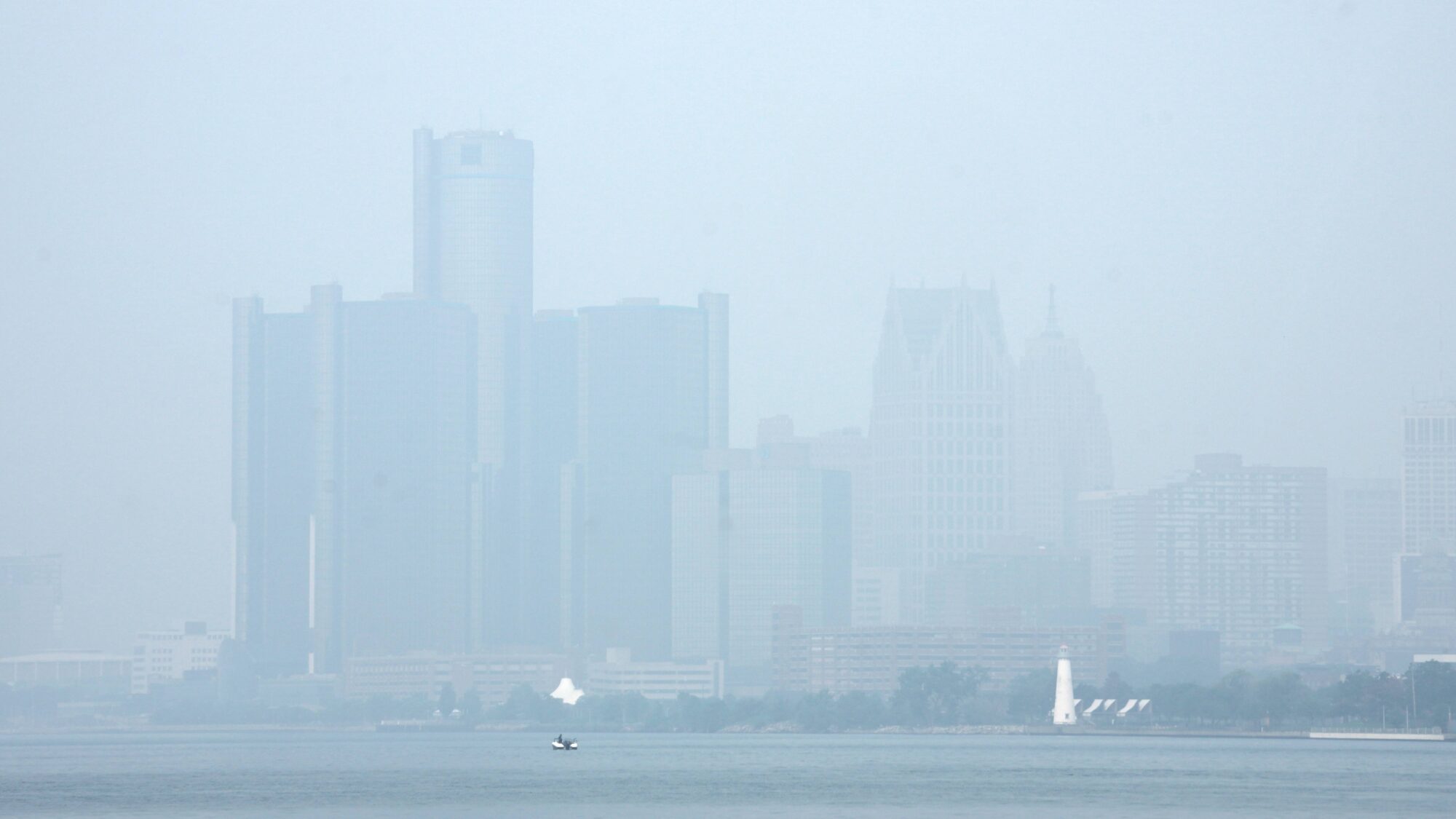
Detroit’s air quality earned another F in the American Lung Association’s annual State of the Air report, with both ozone and fine particulate matter levels worsening for the region’s roughly four million residents.
The Detroit-Warren-Ann Arbor region now ranks 11th worst in the country for short-term particle pollution, a significant drop from its No. 22 position in last year’s report. For year-round PM2.5, the region sits at No. 9 nationally, which is actually a slight improvement from the No. 6 ranking it held the year before. The numbers tell a mixed story, but the headline is the same: the air here is still failing federal health standards, and conditions moved in the wrong direction on the metrics that matter most to people breathing outside every day.
Wayne County bore the brunt of it. The county logged 20 high ozone days and 25 high PM2.5 days between 2022 and 2024, including one day that hit the federal Air Quality Index’s purple range, which the AQI classifies as very unhealthy. Annual unhealthy PM2.5 days in Wayne County rose from an average of 8.5 to 9.3. Ozone pollution days climbed too, from a weighted average of 6.2 days per year to 6.8.
Those aren’t abstract numbers.
PM2.5 particles are 30 times smaller than the width of a human hair. They don’t just irritate lungs. They move into the bloodstream, and the American Lung Association links long-term exposure to cardiopulmonary disease, premature death, and mental health conditions. Children are especially at risk. Nearly half of all U.S. children, 46% of those under 18, live in an area that received an F for at least one pollution measure in this year’s report.
Ozone pollution carries its own set of consequences, specifically respiratory damage and more frequent asthma attacks for people already managing the condition. Southwest Detroit and other communities near industrial corridors have lived with these realities for decades, and this year’s report shows the region isn’t closing the gap fast enough.
Climate and federal rollbacks compound the problem
The American Lung Association’s report points to two forces working against air quality progress that the Clean Air Act spent 50 years building.
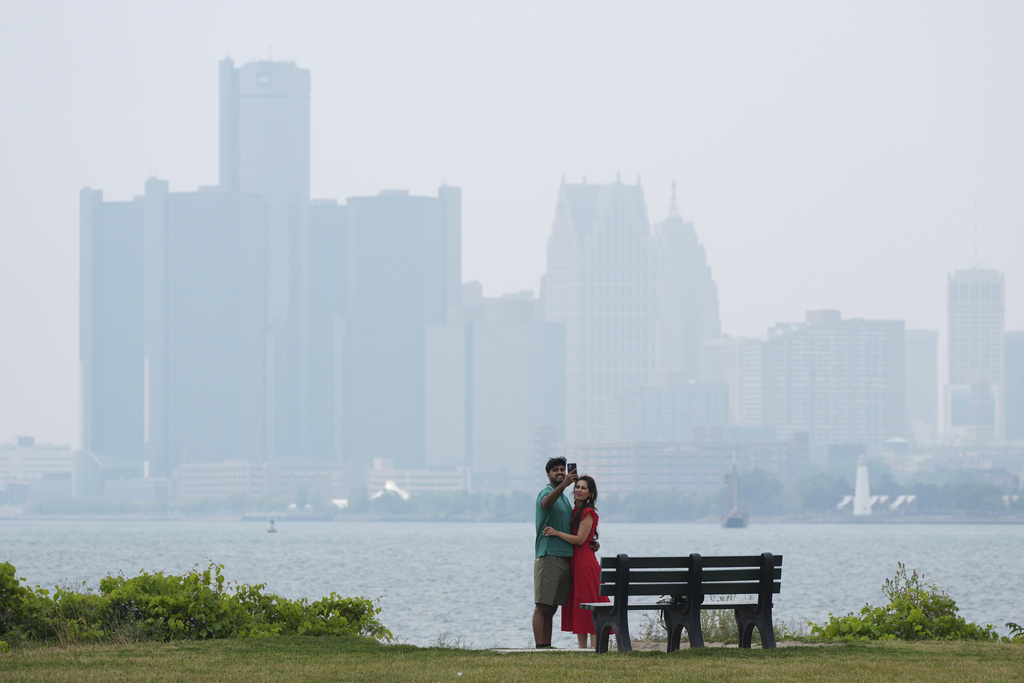
First, climate change. Hotter temperatures speed up the chemical reactions that form ozone. Wildfires driven by drought and heat pump PM2.5 across hundreds of miles, and those smoke events are showing up more often in Great Lakes region air quality data. The conditions for cleaner air are harder to sustain when the climate itself is shifting toward more pollution.
Second, and more directly actionable, is what’s happening at the federal level. Harold Wimmer, president and CEO of the American Lung Association, said in a statement that the timing couldn’t be worse. “In the last year, EPA has weakened enforcement and rolled back rules that would have protected kids from power plant and vehicle pollution,” he said. Wimmer’s organization argues that Bridge Detroit’s coverage of this report reflects a national pattern, not a local outlier. The EPA did not respond to a request for comment.
The association also flagged the growing energy demands of data centers as an emerging threat to air quality gains, arguing that increased electricity load pushes older, dirtier generation sources back online.
What this means for Detroit neighborhoods
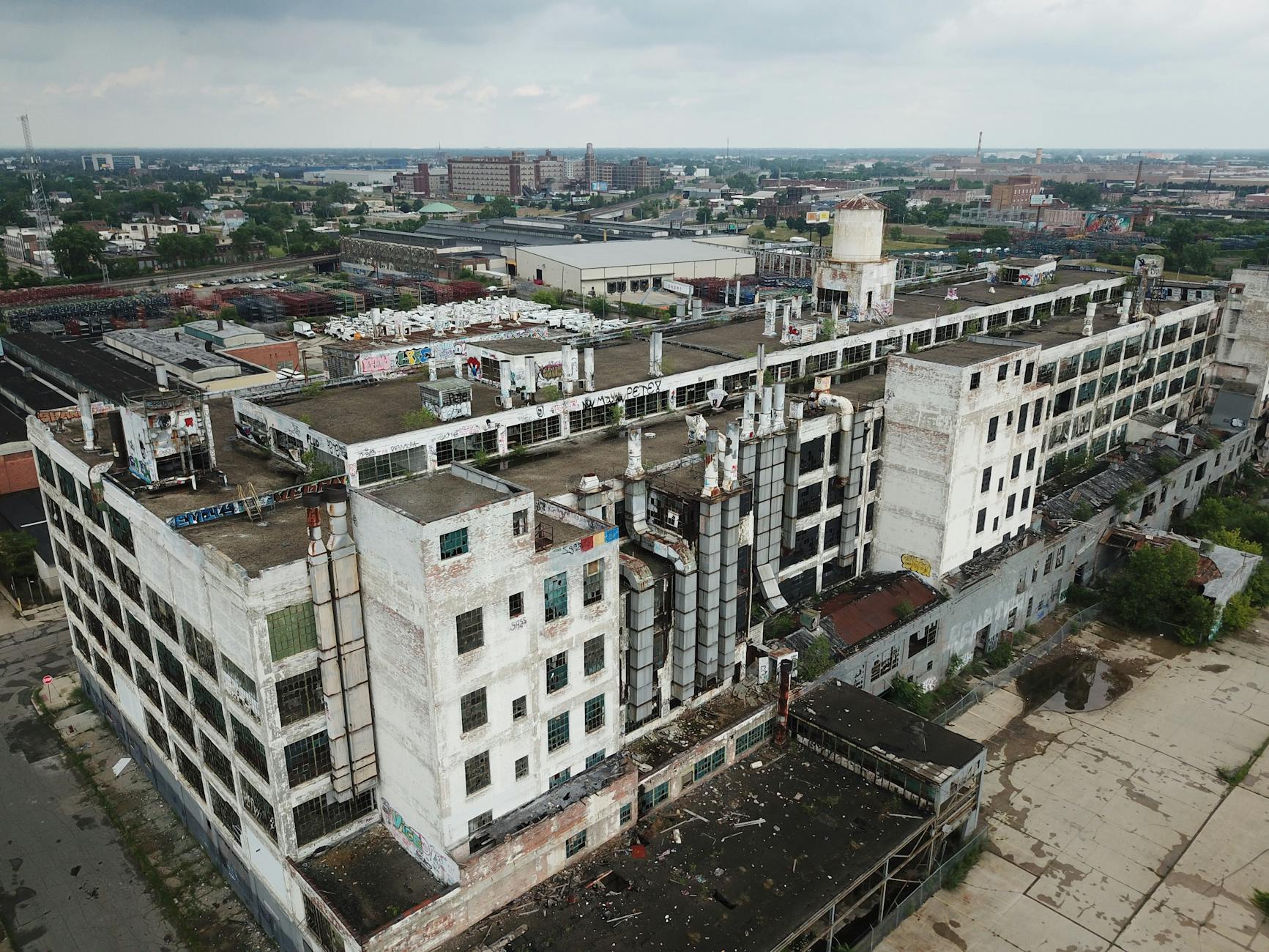
For residents in Delray, Boynton, and along the industrial stretch of the River Rouge, cleaner air has always been a long-range promise rather than a present reality. The State of the Air report doesn’t break out neighborhood-level data, but Wayne County’s county-wide averages consistently undercount the pollution burden in communities that sit next to freight corridors, refineries, and manufacturing plants.
City health officials haven’t yet responded publicly to this year’s findings. The Detroit Health Department runs air quality monitoring in coordination with the Michigan Department of Environment, Great Lakes, and Energy, and EGLE posts real-time AQI readings through its statewide network. Residents can check current conditions at AirNow.gov, the federal monitoring portal updated daily.
The American Lung Association’s State of the Air report covers the three-year period from 2022 through 2024, meaning the data predates some of the most recent federal enforcement changes. The 2027 report will be the first to fully capture the policy environment that exists right now, and the association says the trajectory of EPA rollbacks makes improvement unlikely without intervention at the state or local level.