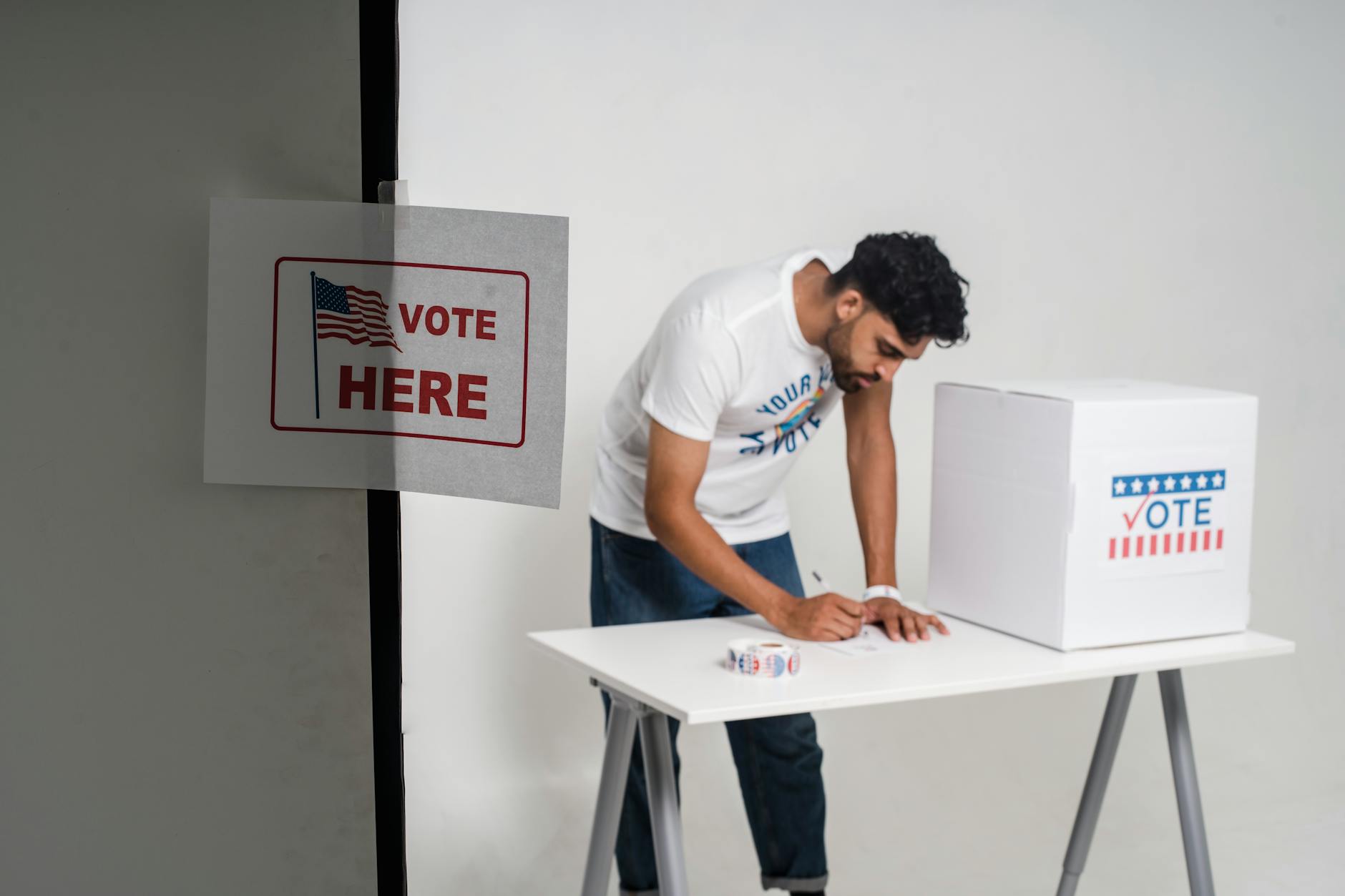
The Michigan House passed House Bill 4765 on Tuesday, tightening voter identification requirements in a straight party-line vote that sets up a direct clash with the Democratic-controlled Senate.
Every Republican present voted yes. Every Democrat present voted no.
The bill, sponsored by Rep. Jason Woolford (R-Howell), would require proof of U.S. citizenship when registering to vote and photo identification at the polls. It mirrors the federal SAVE Act, which Republicans in Washington have also pushed this year. Woolford framed it as basic protection. “Election integrity should not be controversial,” he said in a statement after the vote. “As lawmakers, we owe it to the people of Michigan to guarantee that only U.S. citizens are voting. For too long, our elections have been vulnerable to interference.”
The bill already cleared the state’s House Election Integrity Committee in March, despite Democratic objections that the legislation is vague about which forms of ID actually qualify.
What Changes at the Polls
Right now, a standard Michigan driver’s license or state ID is enough to vote. Under House Bill 4765, that wouldn’t cut it anymore for registration purposes. Voters would need an enhanced driver’s license or supplemental documents, a birth certificate or a passport, to complete registration.
For Detroiters who don’t have a passport and haven’t needed one, that’s a real cost. A U.S. passport currently runs $130 in application fees alone. Enhanced driver’s licenses require a trip to a Secretary of State branch with documentation in hand. Not everyone has that documentation within easy reach, and branch wait times in Wayne County can stretch for hours.
Monique Stanton, President and CEO of the Michigan League for Public Policy, said the bill’s plain language doesn’t match its practical effect on voters. “On the surface, this bill may look like it’s about voter identification and preventing so-called voter fraud, but it’s really about trying to make it more difficult for eligible citizens to exercise their right to vote in state elections,” she told Michigan Advance.
The Fraud Numbers Don’t Match the Urgency
The scale of noncitizen voting in Michigan is tiny. The Michigan Department of State reviewed voter identification and flagged 15 cases of potential noncitizen voters out of 5.7 million ballots cast. That’s a rate of roughly 0.00026 percent.
Stanton put it plainly: “This shows that the systems the state has in place to prevent voter fraud are already working.”
Noncitizen voting is already illegal. It has been for a long time. Supporters of the bill haven’t disputed that fact. They argue the bill adds a layer of verification that makes the existing prohibition enforceable and visible. Critics say the verification burden falls hardest on low-income voters, elderly residents, and naturalized citizens who may not carry passports or have easy access to birth certificates.
There have been confirmed fraud cases. A Chinese student voted illegally in the 2024 election and admitted it, leading to criminal charges in Washtenaw County. That case is real. It’s also one case.
Who It Affects in Detroit
Detroit. That’s where this lands hardest. Wayne County has a high share of naturalized citizens, elderly residents on fixed incomes, and voters who depend on public transit to reach a Secretary of State office. The Michigan Department of State’s branch locator shows limited hours at several Detroit-area locations, which matters when someone has to make multiple trips to gather documents.
The National Conference of State Legislatures tracks voter ID laws across the country. Michigan currently has a relatively accessible ID standard compared to strict photo ID states. House Bill 4765 would move Michigan closer to that stricter end.
House Democrats argued in committee and on the floor that the bill’s vague language on qualifying ID creates implementation problems. Secretary of State offices would need clear guidance on what documents count before they can apply the new rules, and that guidance isn’t in the bill.
What Happens Next
The bill heads to the Democratic-controlled Senate, where its prospects look poor. Senate Democrats haven’t shown interest in stricter voter ID measures, and the governor hasn’t signaled support.
Woolford and House Republicans know that. This vote is as much about positioning ahead of the 2026 election cycle as it is about passing law. Democrats will run against it. Republicans will run on it.
The 15 flagged cases in 5.7 million ballots won’t settle that argument either way.